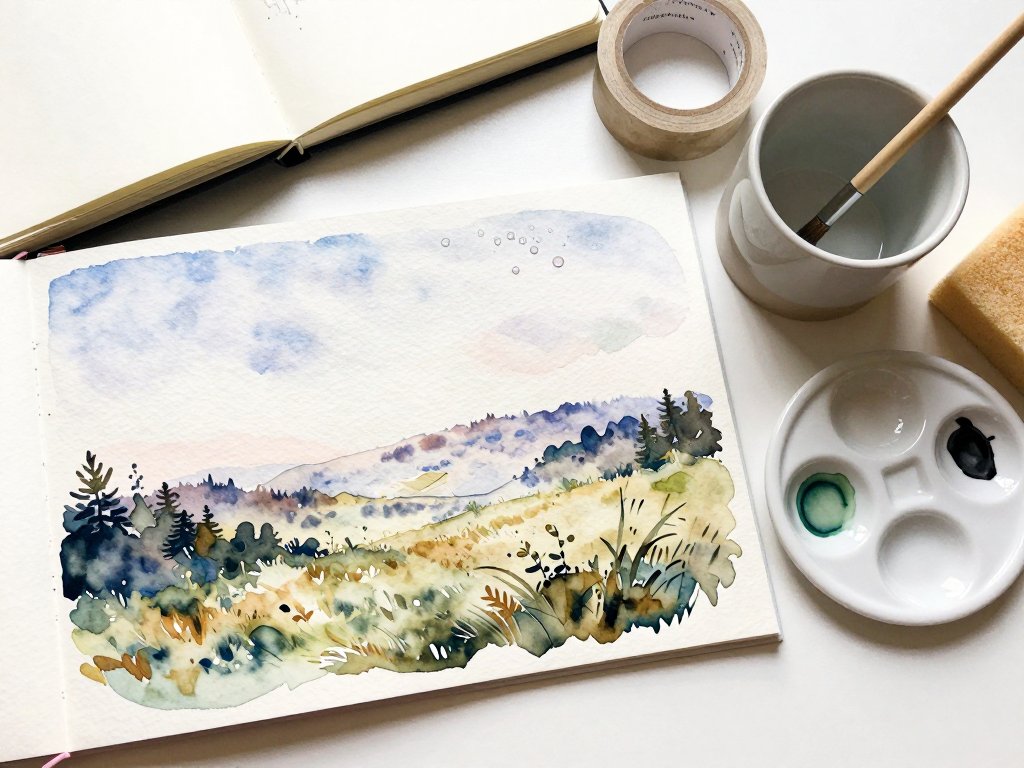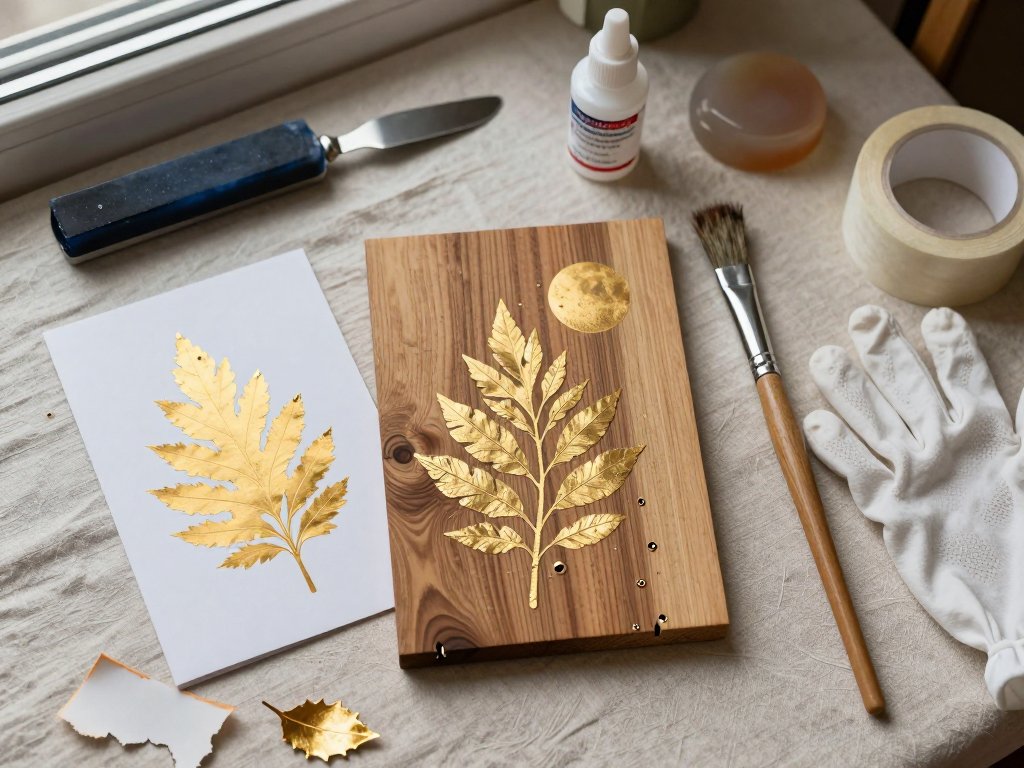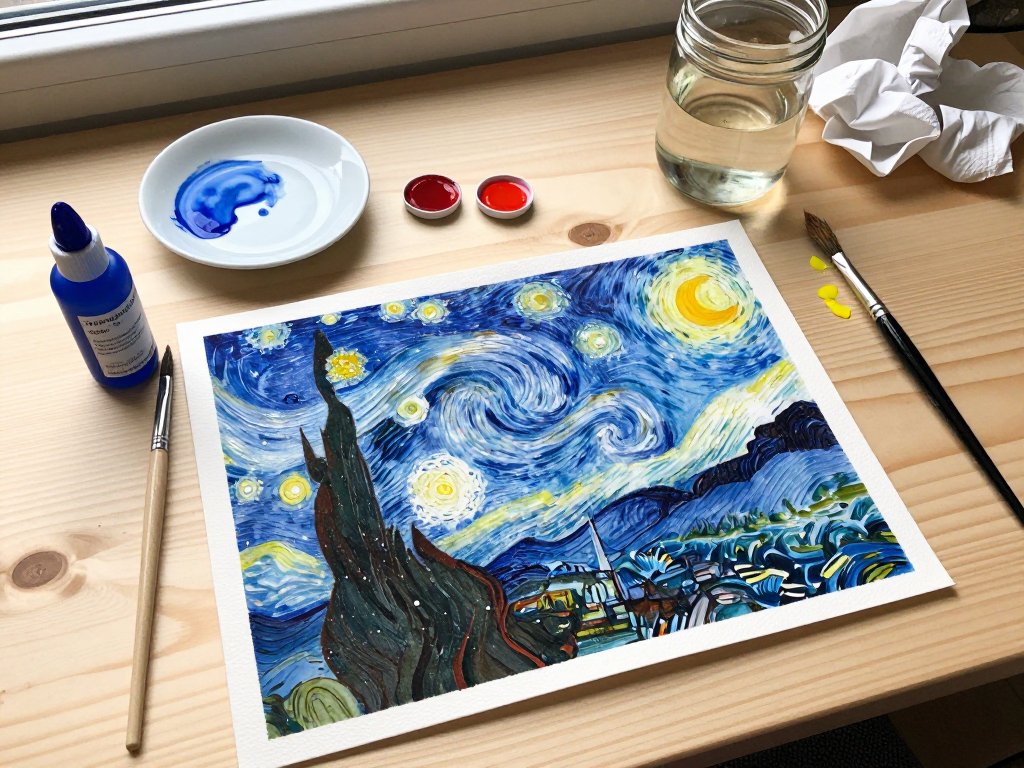
Introduction
The first time I tried to paint a white flower in watercolor, I botched it completely.
I had planned around the petals so carefully — leaving white space, painting the background up to the edges — but my brush wobbled, the paint bled into the bloom, and what should have been a delicate daisy turned into a muddy blob.
I sat back, frustrated, and wondered how professional watercolorists achieved those razor-sharp edges and perfect white highlights that seemed to glow from within the paper.
The answer, I would later learn, was a humble bottle of liquid latex — masking fluid.
It looked like pale yellow rubber cement and smelled faintly of ammonia, but it held the power to transform my relationship with watercolor.
With a brush dipped in this magical liquid, I could paint a barrier, let the color flow freely around it, and then rub the barrier away to reveal pristine white paper underneath.
It felt almost like a secret, a cheat code for a medium known for its unforgiving nature.
Masking fluid, also called liquid frisket, allows you to preserve areas of white paper while you paint wet washes everywhere else.
It is the closest thing watercolor has to an undo button, and for busy moms painting in short bursts between carpool and dinner prep, that is worth its weight in gold.
In this guide, I will walk you through the basics of watercolor resist techniques using masking fluid — what to buy, how to apply it, how to paint over it, and how to remove it without damaging your paper.
By the end, you will have the skills to create paintings with luminous white highlights and crisp, clean edges that look like they took hours of painstaking planning.
What Is Masking Fluid and Why Use It?
Masking fluid is a liquid latex solution that dries to form a removable, water-resistant barrier on your paper.
When you paint watercolor over it, the paint beads up and flows around the masked area.
Once the paint is dry, you rub the masking fluid off with your finger or a soft eraser, revealing the untouched white paper below.
It is that simple — and that satisfying.
The technique is not new. Watercolorists have used some form of resist for centuries. Traditional Chinese and Japanese painters used rice paste to preserve white areas, while European botanical illustrators employed a painstaking process of painting around each tiny detail.
Modern masking fluid, invented in the mid-twentieth century, gave artists the freedom to paint bold, loose washes without fear of losing their highlights.
Today it is a staple in every watercolorist's toolkit, from professional illustrators to weekend hobbyists.
For a beginner, masking fluid is particularly valuable because it removes one of the biggest stressors in watercolor: protecting the white of the paper.
With masking fluid, you can paint confidently, knowing that your highlights are safe. You can layer washes without worrying about drifting back into a white area.
You can even paint over the masked area multiple times, building up deep, rich colors that frame your highlights like jewels.
Choosing the Right Supplies
Masking Fluid
Not all masking fluids are created equal. Some formulas are thick and gloopy, difficult to apply smoothly.
Others are runny and prone to dripping. For beginners, I recommend starting with a brand known for its consistency and reliability.
Winsor & Newton's Art Masking Fluid is my personal favorite — it has a pourable consistency that flows easily from a brush, and it peels off cleanly even after several days.
Pebeo's drawing gum is another excellent option, slightly thinner and available at most craft stores.
A two-ounce bottle costs about eight dollars and will last for dozens of paintings.
If you have sensitive skin or a sensitive nose, look for an ammonia-free formula. Schmincke's liquid frisket is ammonia-free and has a milder odor, though it is slightly more expensive.
Whichever brand you choose, avoid using it straight from the bottle with your good brushes — I will explain why in the next section.
Application Tools
Masking fluid will ruin your paintbrushes. The latex dries inside the ferrule, gluing the bristles together, and once it sets, no amount of cleaning will save them. This is not a tragedy — it is simply a matter of using the right tools for the job. Here are your options:
Old brushes: Keep a few cheap synthetic brushes specifically for masking fluid. Mark the handles with a dot of red nail polish so you never accidentally dip them into your watercolor. Rinse them in soapy water immediately after use, and they will last through many sessions.
Silicone brushes: These are purpose-made for masking fluid. The silicone bristles are non-stick — the fluid beads up and does not penetrate the ferrule. A set of three costs about ten dollars and will last indefinitely. I find them worth the investment for the peace of mind alone.
Dip pens or ruling pens: For fine lines and detailed work, a dip pen with a nib can be more precise than any brush.
Dip the nib into the masking fluid, draw your line, and wipe the nib clean immediately.
This is my preferred method for painting tiny white highlights, such as the sparkle in an eye or the veins of a leaf.
Toothbrush spatter: For a spray of white dots — stars in a night sky, foam on a wave — dip an old toothbrush into diluted masking fluid and flick the bristles over your paper. The effect is magical and impossible to replicate with a brush.
Paper
Masking fluid works best on paper that is at least 140-pound cold press. The heavier paper can withstand the gentle rubbing required to remove the fluid without tearing or roughing up the surface.
Cheaper paper, especially student-grade sheets under ninety pounds, may pill or peel when you remove the masking fluid.
Arches, Fabriano, and Stonehenge are all reliable choices. A block of hot press paper also works well for detailed illustrations where you want a smoother surface.
One tip I learned the hard way: test your masking fluid on a corner of your paper before committing to a full painting.
Some papers have a surface sizing that repels the fluid, causing it to bead up unpredictably.
Also, some masking fluids can stain certain papers, leaving a faint yellow residue that will not wash out.
A quick test saves you from discovering these issues halfway through a piece.
Preparing Your Workspace
Masking fluid is messy. It drips, it strings, and it has a distinct chemical smell that can be unpleasant in a closed room.
Open a window or work near a fan. Lay down newspaper or a crafting mat to protect your table.
Have a cup of soapy water ready to rinse your application tools immediately — the fluid dries in minutes, and dried latex is much harder to remove.
Wear old clothes or an apron. If masking fluid gets on fabric, it dries into a rubbery spot that is nearly impossible to remove. Keep a damp paper towel nearby to wipe up spills on your work surface before they dry.
I like to set up my masking fluid station separately from my painting area. I apply the fluid, let it dry while I make a cup of tea, and then return to a clean, dry workspace for the painting step.
This separation keeps the fluid from contaminating my water or my palette.
Basic Technique: Applying and Removing Masking Fluid
Step 1: Plan Your Masking. Before you touch a brush to the bottle, take a moment to plan which areas of your painting will remain white.
These are the highlights — the brightest spots on a dew drop, the white of a cloud, the petal of a white flower, a streak of sunlight on water.
You can also mask areas that you want to paint a different color later, such as a sailboat that you will paint in a separate session.
Step 2: Apply the Fluid. Dip your application tool into the masking fluid and apply it to the areas you want to protect.
Work quickly but carefully — the fluid dries fast and becomes difficult to remove once set.
Do not apply it too thickly; a thin, even layer works best. If you are using a brush, dip it in soapy water first to help the fluid flow more smoothly and protect the bristles.
Step 3: Let It Dry. Wait until the masking fluid is completely dry and clear or slightly tacky to the touch.
This usually takes ten to fifteen minutes, depending on the thickness of the application and the humidity in your room.
Resist the urge to speed things up with a hair dryer — the heat can make the fluid harder to remove and may damage the paper's surface.
Step 4: Paint Your Washes. Once the fluid is dry, paint over it as you normally would.
The watercolor will bead up on the masked areas and flow around them. Do not worry if a little paint sits on top of the dried fluid — it will come off when you remove the mask.
Paint confidently, knowing that everything underneath is safe.
Step 5: Let the Paint Dry. Wait until your watercolor is completely dry before removing the masking fluid.
If the paper is still damp, the friction of removal can tear the surface. Patience is your friend here.
I like to finish a painting session, let it dry overnight, and remove the mask the next morning.
Step 6: Remove the Mask. Gently rub the dried masking fluid with a clean finger or a soft eraser.
It should lift off in rubbery flakes, revealing bright white paper underneath. If it feels stubborn, resist the urge to scrape — instead, use a soft kneaded eraser to lift the edges.
If you used a dip pen for fine lines, a pair of tweezers can help grip the tiny flakes.
Remove all traces of fluid before framing or storing your painting, as leftover latex can yellow over time and attract dust.
Three Beautiful Resist Techniques to Try
1. The Ghost Wash
Paint a simple shape — a circle for the sun, a leaf, a bird in flight — with masking fluid.
Let it dry. Then paint a loose, watery wash of color over the entire page: ultramarine blue for a sky, viridian green for a forest, burnt sienna for a desert landscape.
Let the wash dry, remove the mask, and you will have a ghostly white shape floating in a sea of color.
The effect is soft, atmospheric, and surprisingly dramatic.
For an even more ethereal result, apply the wash while the paper is still damp. The color blooms and spreads organically, and when you remove the mask, the white shape emerges like a memory from the haze. This technique is wonderful for foggy landscapes, misty mornings, and dreamlike illustrations.
2. Layered Resist
Masking fluid is not limited to a single application. You can paint a wash, let it dry, apply more masking fluid to new areas, paint another wash, and repeat, building up layers of protected highlights.
Imagine a mountain landscape: mask the snowcaps, paint a light blue sky wash, let it dry, mask the cloud shapes, paint a mid-tone mountain wash, let it dry, mask the tree line, and finish with a dark foreground wash.
When you remove all the masks at the end, you reveal a complex, multi-layered scene with pristine highlights at every stage.
The key to layered resist is to ensure each layer of watercolor is completely dry before applying more masking fluid.
If the paper is damp, the new mask can bond too strongly and tear the surface on removal.
Take your time, and work in stages if needed — a layered resist painting can span several days without losing any quality.
3. Splatter and Spatter Resist
For a playful, textured effect, load a toothbrush with diluted masking fluid and flick the bristles over your paper.
The resulting spray of tiny dots will preserve white specks in your final painting. This is perfect for stars in a night sky, foam on crashing waves, confetti in a celebration scene, or the texture of a sandy beach.
Paint a dark blue wash over the spattered paper, let it dry, remove the mask, and watch the stars appear.
You can control the size of the dots by adjusting the distance between the toothbrush and the paper. Hold it close for large, dense dots, or farther away for a fine, scattered mist. Practice on scrap paper first to get a feel for the technique.
A Simple Project: Starry Night Sky
Let me walk you through a complete project that uses the splatter resist technique — a starry night sky. This is one of the most rewarding beginner projects because the results are stunning with very little effort.
Step 1: Tape your paper to a board with masking tape. Use a sheet of 140-pound cold press paper. Make sure it is secure and lies flat.
Step 2: Dip an old toothbrush into diluted masking fluid. Flick the bristles over the top two-thirds of your paper to create a spray of white dots. Let the masking fluid dry completely.
Step 3: Paint a wash of clean water over the entire paper. While it is still damp, drop in colors for your night sky: ultramarine blue, alizarin crimson for a touch of warm glow near the horizon, and a hint of dioxazine purple.
Let the colors blend naturally. Tilt the board gently to encourage the paint to flow.
Let the wash dry completely.
Step 4: For the lower third, paint a dark silhouette — a mountain range, a pine forest, or a simple hillside — using a mix of ultramarine blue and burnt sienna for a deep, warm black. Keep the silhouette simple and bold. Let this dry.
Step 5: Gently rub off all the masking fluid with your finger. The white dots from the splatter will shine through the dark blue sky like stars. If the stars look too sharp, you can soften them by dabbing the area with a damp brush after removing the mask.
Step 6: Add a few larger stars by dipping a fine brush or a dip pen in masking fluid and dotting them in specific spots before the final wash. Or add them after removal with a tiny brush and white gouache — the choice is yours.
Frame your finished painting and admire it. You have just used masking fluid to create a luminous, atmospheric night sky that would have been nearly impossible to achieve by painting around the stars.
Troubleshooting Common Masking Fluid Problems
Masking fluid is too thick to apply. Add a drop or two of water to the bottle and shake gently. Do not add too much — it should be the consistency of thin cream. Alternatively, try a different brand; some are naturally thinner than others.
The fluid is tearing my paper. Your paper may be too light or you may be removing the mask too aggressively. Switch to 140-pound or heavier paper, and remove the mask more gently. If the paper is damp, wait for it to dry completely.
Paint is bleeding under the mask. This happens when the mask was applied too thinly or the paper was too smooth. Apply a second thin layer of masking fluid over the first, ensuring full coverage. On hot press paper, you may need two coats for a secure seal.
I cannot see where I applied the mask. Some masking fluids are tinted a pale yellow or pink, making them easier to see.
If yours is clear, add a tiny drop of watercolor to the bottle — just enough to tint it — so you can see where you have applied it.
Stir gently and test on scrap paper before using it on your painting.
Yellow residue remains after removal. Some papers and masking fluid combinations leave a faint stain.
If a gentle rub with a soft eraser does not remove it, you can paint over the area with a thin white gouache wash.
The residue is usually not visible through framing glass, so do not worry too much about it.
When Not to Use Masking Fluid
As much as I love masking fluid, it is not always the right tool. For large areas of white — a big cloud, a wide highlight — it is often simpler and more natural to paint around the area or lift the paint with a damp brush.
Masking fluid excels at small, precise details: the sparkle in an eye, the vein of a leaf, the tiny highlights on a dewdrop.
Also consider that masking fluid creates hard edges, which is part of its charm. But if you want a soft, diffused highlight — the glow of sunlight through fog, the gentle reflection on still water — you are better off preserving the white by painting around it with a careful brush, or lifting the paint while it is still damp with a tissue or a sponge.
Masking fluid gives you razor-sharp edges; use it deliberately where that effect serves your composition.
From Practice to Mastery
The first time I used masking fluid, I painted a single white daisy against a loose blue wash.
It was a simple exercise, but when I peeled off the mask and saw that perfect white flower emerge from the blue, I felt a thrill I had not experienced since my first watercolor class.
That one success gave me the confidence to try more complex compositions — a beach scene with white foam, a forest with sunbeams, a portrait with catchlights in the eyes.
Masking fluid is not a crutch; it is a tool. Like any tool, it takes practice to use well.
You will have some off days where the fluid is too thick, the paper tears, or the paint bleeds.
That is normal. Keep a scrap piece of paper nearby and test your mask before applying it to your painting.
Learn how your particular brand of fluid behaves on your preferred paper. And remember that every layer you mask and unmask teaches you something about the relationship between light and shadow, between control and freedom.
So pick up a bottle of masking fluid, an old brush, and a sheet of good paper.
Paint a simple shape, cover it with the magic latex, wash over it with your favorite color, and peel away the barrier.
That moment of revelation — the bright white paper shining through the watercolor like a gift — is worth every bit of the mess and the smell and the learning curve.