Introduction
There is something deeply satisfying about a handmade bag. Unlike a scarf or a hat, which you wear against your body, a bag accompanies you through your day — holding your phone, your wallet, your keys, your toddler's snacks, the library book you keep meaning to return. It is a vessel for your life, and when you have crocheted it yourself, every stitch carries a memory of the afternoon you spent making it.
Crocheted bags have a long and fascinating history. Long before the modern tote became a fashion staple, women around the world were crafting carrying bags from whatever fibers were available — hemp, jute, cotton, and wool. In nineteenth-century England, crocheted reticules (small drawstring bags) were fashionable accessories carried by ladies of all social classes. In Ireland and Scotland, fishermen's wives crocheted sturdy net bags for carrying peat and potatoes. The techniques were passed down through generations, each family adding its own variations to the stitches and patterns. When you pick up a hook and yarn to make a tote today, you are continuing a tradition that spans centuries and continents.
Summer is the perfect season for crocheted totes. The lightweight cotton yarn feels cool in your hands, the open stitches let sand and crumbs fall through instead of accumulating at the bottom, and the bright colors evoke the easy, sun-drenched rhythm of the season. Whether you are heading to the farmer's market, the beach, or the library, a handmade crochet tote is both practical and beautiful. In this guide, I will walk you through everything you need to know to create your first summer tote, from choosing the right yarn and hook to mastering the essential stitches and finishing your bag with a professional touch.
A Brief History of the Crocheted Bag
Before we dive into the stitches, let us take a moment to appreciate the craft we are about to practice. Crochet itself emerged as a distinct technique in the early nineteenth century, evolving from earlier needlework traditions such as tambour embroidery and shepherd's knitting. The word "crochet" comes from the French word for hook, and the earliest published crochet patterns appeared in Dutch and English women's magazines in the 1820s.
The crocheted bag, however, has even deeper roots. Archaeological evidence suggests that looped and knotted bags were made as far back as ancient Egypt and Peru, using techniques that closely resemble modern crochet. In the Middle Ages, European women crafted "net purses" using a technique called "tricot" or "looped knitting" that allowed them to create lightweight, expandable bags for carrying goods to market. These early bags were practical objects, not decorative ones — they served a real need in daily life.
By the Victorian era, crocheted bags had become both practical and fashionable. Women carried delicate silk reticules to social events and sturdy cotton market bags for shopping. The Arts and Crafts movement of the late nineteenth century elevated handmade objects like crocheted bags to the status of art, celebrating the skill and creativity of the makers. Today, the crochet tote is experiencing a renaissance. Modern makers appreciate its sustainability (reusable, washable, biodegradable when made from natural fibers), its portability (the project itself fits in a small bag), and its satisfying quickness — a simple tote can be finished in a weekend.
Choosing Your Yarn and Hook
Yarn
For a summer tote, you want a yarn that is strong, lightweight, and cool against the skin. Cotton is the traditional choice, and for good reason. It has a high tensile strength that holds up well under the weight of groceries or library books, it washes beautifully, and it comes in a vast array of colors. For your first tote, I recommend a worsted-weight (medium, category 4) cotton or cotton-blend yarn. Lily Sugar'n Cream and Peaches & Creme are affordable, widely available, and come in cheerful summer shades — think coral, aqua, lemon yellow, and cream. A single large skein (around 400 yards or 365 meters) is enough for a small to medium tote, though you will want two skeins for a roomy bag with long handles.
If you want a more luxurious finish, consider a mercerized cotton such as DMC Petra or Katia Cotton-Mercer. The mercerization process gives the yarn a subtle sheen and makes the stitches more defined — a lovely effect for a bag you plan to use as a fashion accessory rather than a workhorse. For the eco-conscious maker, organic cotton yarns like those from Lion Brand's Re-Up or Scheepjes Organicon are excellent choices. They are grown without synthetic pesticides and processed with minimal chemicals, and they have a soft, natural feel that improves with each wash.
A word of caution about acrylic yarn for bags: while acrylic is soft and affordable, it lacks the tensile strength of cotton and can stretch out of shape under the weight of heavy items. If you do choose acrylic, use a tight stitch pattern (single crochet or half double crochet) and consider lining the bag with fabric to reinforce it. Blended yarns, such as cotton-acrylic blends, offer a middle ground — they are more durable than pure acrylic and more forgiving than pure cotton.
Hook
For worsted-weight cotton, a 5.0mm (H-8) or 5.5mm (I-9) hook is ideal. Cotton has less elasticity than wool, so you may find that you need a slightly larger hook than the yarn label recommends to achieve a drape that is neither too stiff nor too loose. Make a small swatch — about four inches square — in your chosen stitch pattern before you begin. If the fabric feels stiff and board-like, go up a hook size. If it feels flimsy and you can see large gaps between stitches, go down a hook size. The ideal fabric for a tote is firm enough to hold its shape but flexible enough to fold and tuck into a diaper bag or purse.
Extras
You will also need a pair of sharp scissors, a tapestry needle for weaving in ends, stitch markers (or safety pins in a pinch), and a tape measure or ruler. If you plan to add a fabric lining, have some cotton fabric, coordinating thread, and a sewing needle ready. A blocking mat and rust-proof pins are useful for shaping the finished bag, though not essential for a simple tote.
Essential Stitches for Your Tote
You only need to know three stitches to make a beautiful crochet tote: chain stitch, single crochet, and double crochet. If you are an absolute beginner, these three stitches will carry you through the entire project. A fourth stitch — the slip stitch — is useful for joining rounds and creating clean edges, but it is not strictly necessary for a flat, rectangular tote.
Chain stitch (ch): This is the foundation of almost every crochet project. Make a slip knot on your hook, yarn over, and pull through the loop. Repeat until you have the desired number of chains. For the tote base, you will chain a length equal to the width of your bag.
Single crochet (sc): Insert your hook into the stitch, yarn over, pull up a loop (two loops on hook), yarn over again, and pull through both loops. Single crochet creates a dense, sturdy fabric that is perfect for the base and sides of a tote. It is also the stitch used for the handles, where you need maximum strength.
Double crochet (dc): Yarn over, insert your hook into the stitch, yarn over, pull up a loop (three loops on hook), yarn over, pull through two loops, yarn over, pull through the remaining two loops. Double crochet creates a looser, more open fabric that works up quickly — ideal for the body of the bag where you want flexibility and airflow.
Once you are comfortable with these stitches, you can experiment with variations such as the half double crochet (a happy medium between sc and dc) and the granny stitch (clusters of three double crochets separated by chain spaces), which creates a classic, textured look that is especially beautiful in multicolored totes.
Pattern: Simple Striped Summer Tote
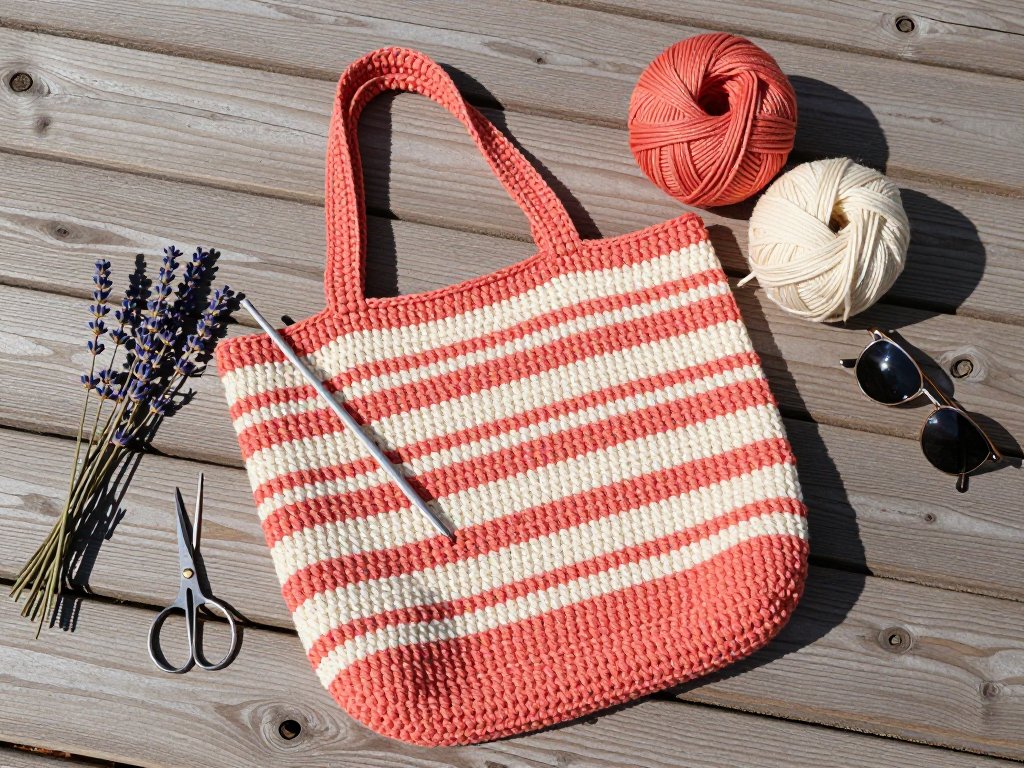
This pattern creates a rectangular tote approximately twelve inches wide and fourteen inches tall, with twelve-inch handles. It uses two colors of worsted-weight cotton and works up in a weekend. The stitch pattern is simple enough for a confident beginner but produces a professional-looking result.
Materials
- Worsted-weight cotton yarn, approximately 400 yards total (Color A: 250 yards for body and handles; Color B: 150 yards for stripes and accent)
- 5.0mm (H-8) crochet hook
- Tapestry needle
- Scissors
- Stitch markers (optional)
Gauge
14 double crochets and 8 rows = 4 inches in double crochet. Adjust hook size as needed to match gauge.
Base (worked in single crochet)
Using Color A, chain 35 loosely.
Row 1: Single crochet in the second chain from the hook and in each chain across. (34 sc)
Row 2: Chain 1, turn. Single crochet in each stitch across. (34 sc)
Rows 3-10: Repeat Row 2. (34 sc each row)
At this point, your base should measure approximately 12 by 3 inches. If it is significantly different, adjust your starting chain count — the base width determines the final width of your bag.
Body (worked in joined rounds)
Now you will work in the round around the base to create the sides of the bag. Do not turn your work at the end of each round.
Round 1: Chain 1. Work 1 single crochet in each stitch across the long edge of the base (34 sc), then 1 single crochet in the side of each row along the short edge (10 sc). Repeat for the remaining two sides: 34 sc across the opposite long edge and 10 sc along the remaining short edge. Join with a slip stitch to the first stitch. (88 sc total)
Round 2: Chain 2 (counts as first double crochet). Double crochet in each stitch around. Join with a slip stitch to the top of the starting chain 2. (88 dc)
Round 3-4: Repeat Round 2 in Color A.
Round 5: Switch to Color B. Chain 2, double crochet in each stitch around. Join. (88 dc)
Round 6: Repeat Round 5 in Color B.
Rounds 7-8: Switch back to Color A. Repeat Round 2.
Continue alternating two rounds of Color B with two rounds of Color A until the body measures approximately 12 inches from the base. End with two rounds of Color A.
Final body round: Switch to Color B. Chain 1, single crochet in each stitch around. Join with a slip stitch. (88 sc)
Handles
The handles are worked flat on each side of the bag opening, leaving a gap in the center for the bag opening.
Row 1: With Color A, join yarn with a slip stitch to the first stitch on one short side of the bag. Chain 1, single crochet in the first 12 stitches. Chain 1, turn. (12 sc)
Rows 2-8: Single crochet in each stitch across. Chain 1, turn. (12 sc each row)
Row 9 (decrease row): Single crochet 2 together, single crochet in the next 8 stitches, single crochet 2 together. Chain 1, turn. (10 sc)
Rows 10-40: Single crochet in each stitch across. Chain 1, turn. (10 sc each row)
Row 41: Single crochet 2 together, single crochet in the next 6 stitches, single crochet 2 together. Chain 1, turn. (8 sc)
Rows 42-48: Single crochet in each stitch across. Chain 1, turn. (8 sc each row)
Fasten off, leaving a long tail for sewing. Fold the handle strip in half and sew the end to the corresponding stitches on the opposite side of the bag opening. Repeat for the second handle on the other short side of the bag.
Finishing
Weave in all ends with your tapestry needle, working them into the fabric of the bag on the wrong side. Trim any excess yarn. If desired, add a fabric lining by cutting a rectangle of cotton fabric to the dimensions of your bag plus a seam allowance, sewing the sides and bottom, and hand-stitching the lining to the inside of the crocheted bag just below the top edge. Block the bag by wetting it gently, shaping it to the correct dimensions, and pinning it to a blocking mat until dry.
Variations and Personalizations
Once you have mastered the basic striped tote, the possibilities are endless. Here are a few variations to inspire your next project:
Granny square tote: Crochet twelve four-inch granny squares (three across, four down) and join them with slip stitches or a whip stitch. This is an excellent project for using up scrap yarn, and the resulting bag has a charming, vintage look.
Mesh market bag: Use a pattern of chain spaces and double crochets to create an open, stretchy mesh that expands to hold a surprising amount of produce. The mesh bag is lightweight, dries quickly after a trip to the beach, and collapses flat for easy storage.
Lined tote with pockets: Add a fabric lining with interior pockets for your phone, keys, and wallet. The lining also reinforces the bag, allowing you to carry heavier items without stretching the crochet stitches. Choose a fun patterned fabric that peeks out when the bag is open.
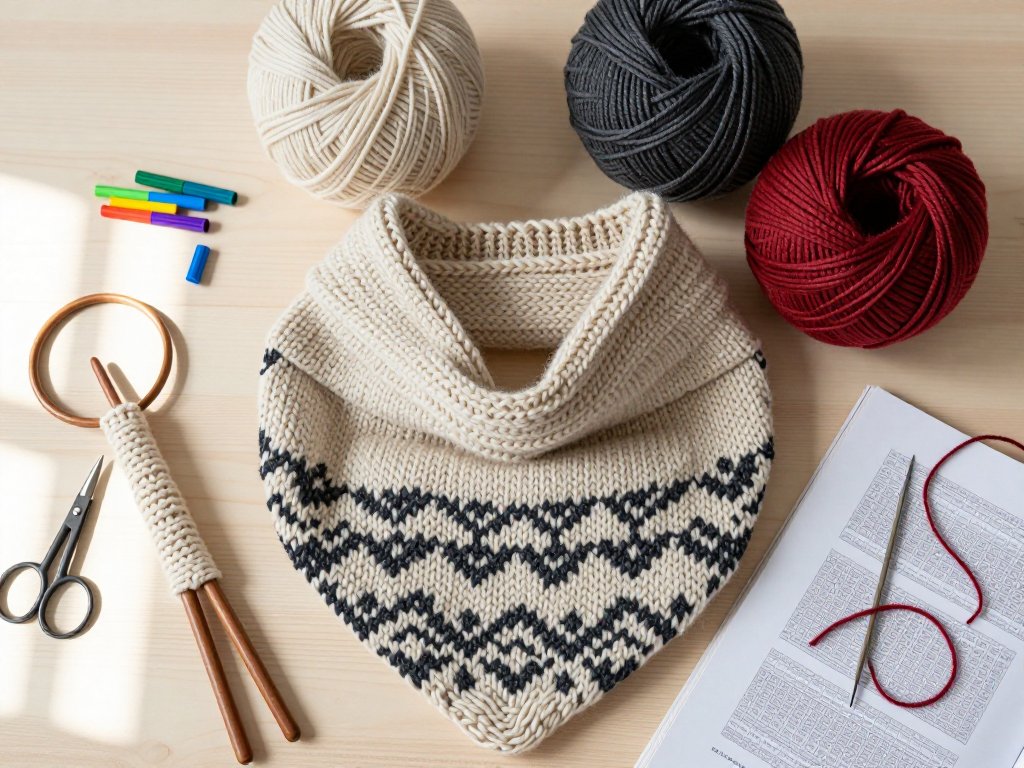
Tapestry crochet tote: Tapestry crochet is a technique where you carry two or more colors across the row, creating geometric patterns and designs. A simple zigzag or diamond pattern in two colors elevates a basic tote to a work of art. The technique uses only single crochet stitches, making it accessible to beginners who want to try colorwork.
Caring for Your Crochet Tote
One of the great advantages of cotton crochet is its durability and washability. To clean your tote, hand wash it in cool water with a gentle detergent, or machine wash it on a delicate cycle in a mesh laundry bag. Reshape it while it is damp and lay it flat to dry — do not hang it, as the weight of the wet fibers can stretch it out of shape. If the bag becomes wrinkled or the stitches look uneven, a light steam ironing (with a pressing cloth between the iron and the crochet) will restore its shape.
Over time, the cotton fibers will soften and the bag will develop a pleasing, lived-in feel. This is part of the charm of a handmade crochet bag — it ages gracefully, becoming more comfortable and familiar with each use. If a strap begins to fray or a stitch unravels, the repair is straightforward: a few stitches with a tapestry needle and matching yarn will reinforce the area, and the bag will be good for many more seasons.
A Stitch in Time
When I finish a crochet tote, I like to hold it up to the light and look at the even rows of stitches, the clean edges where the colors changed, the sturdy handles that I know will carry a heavy load of farmer's market produce without complaint. Each stitch represents a moment of quiet focus, a small act of creation in a busy day. The bag will accompany its maker to the beach, the grocery store, the park — carrying not just objects but the memory of the hands that made it.
Crochet has been connecting makers across generations for nearly two hundred years. The same chain stitch you make today, with your hook and your chosen yarn, is the same chain stitch that a Victorian woman made with her steel hook and silk thread, and that a Scottish fisherman's wife made with her wool yarn by the fire. When you crochet a tote bag, you are not just making a useful object. You are participating in a tradition that is both ancient and ever-renewing. So pick up your hook, choose your colors, and make something beautiful that will carry you through the summer and beyond.