Introduction
Walk through any farmers' market this summer, scroll through your Instagram feed, or browse the racks at your favorite boutique, and you will see them everywhere: crochet dresses.
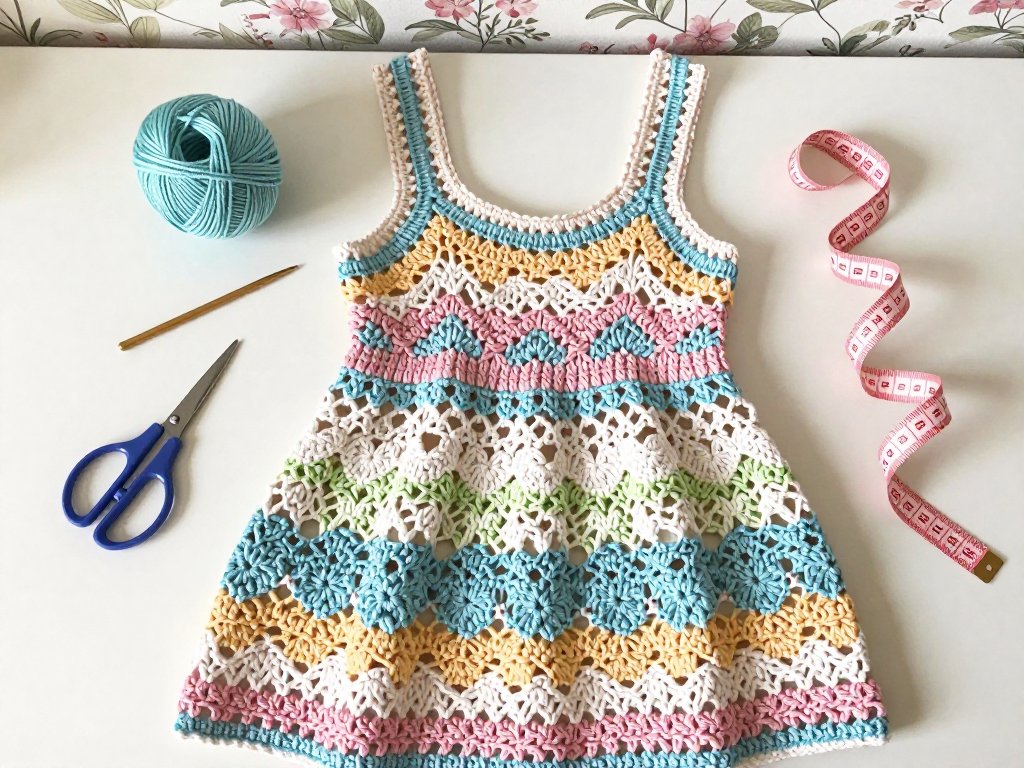
They drift through the heat in cream and ivory, in pastel pinks and sun-bleached blues, in chunky granny squares and delicate filet lace.
They are being worn by fashion influencers, by moms at school pickup, and by bridesmaids at beach weddings.
And the most remarkable thing about this trend? Many of these dresses started not in a factory, but at someone's kitchen table, hook in hand.
Crochet dresses represent something rare in the fashion world — a trend that you can actually make yourself, with your own two hands, for a fraction of what you would pay at a boutique.
But before we dive into patterns and stitches, I want to take you on a little journey.
Because the story of the crochet dress is a story about women, about resourcefulness, and about the quiet revolution of handmade fashion.
A Stitch Through Time: The History of the Crochet Dress
To understand why crochet dresses are having their moment, we need to look back at where they came from.
Crochet itself — from the French word croche, meaning "hook" — emerged in Europe in the early nineteenth century.
It began as an imitation of lace-making, which was painstakingly slow and required expensive equipment.
Crochet offered working-class women a way to create delicate, lacy fabrics with nothing more than a humble hook and a ball of thread.
By the 1840s, crochet patterns were being published in women's magazines, and Irish crochet lace became famous for its intricate floral motifs.
During the Irish Potato Famine, crochet was taught to women and children as a means of earning income — a poignant example of craft as survival.
The delicate white collars, cuffs, and even entire baby dresses produced during this period are still treasured as heirlooms today.
Fast forward to the 1960s and 1970s, and crochet took on a very different identity.
The counterculture movement embraced handmade everything, and the crochet dress became a symbol of bohemian freedom.
Picture Janis Joplin in a floor-length granny-square vest, or a Woodstock attendee in a cream-colored crochet mini dress.
This was crochet as rebellion — a rejection of mass production in favor of personal expression.
The 1990s and early 2000s brought a more polished version of the trend, with designers like Missoni and Dolce & Gabbana incorporating crochet into high fashion collections. But it was still largely seen as something you bought, not something you made.
Now, in 2026, we are witnessing something beautiful: a full-circle moment. The crochet dress has returned to its roots.
Social media platforms like TikTok and Instagram are filled with makers showing off their handmade dresses, sharing free patterns, and proving that you do not need a fashion degree to create something runway-worthy.
The handmade has become high fashion once again.
Why Crochet Dresses Are Perfect for Summer
There are practical reasons for the crochet dress's summer popularity, and then there are emotional ones. Let me share both.
The Practical Side: Crochet fabric is inherently breathable. The open stitches create natural ventilation — tiny windows for air to circulate while still providing coverage.
On a humid July afternoon, a cotton or linen crochet dress will keep you cooler than almost any woven fabric.
Moreover, crochet fabric has a beautiful drape and stretch that moves with you, making it surprisingly comfortable for long days at the park, farmers' market browsing, or chasing toddlers in the backyard.
The Emotional Side: There is something about wearing a garment you have made yourself that changes how you carry yourself.
You stand a little taller. You smile a little more. And when someone compliments your dress, you get to say those magical words: "Thank you — I made it." In a world of fast fashion and identical outfits, a handmade crochet dress is a statement of individuality.
It says that you value your time, your creativity, and the slow, deliberate act of making something beautiful.
Choosing Your First Crochet Dress Pattern
If you are new to crochet, the idea of making an entire dress might feel overwhelming. I completely understand. But here is the secret: many crochet dresses are made from simple, repetitive shapes that are easier than they look. Let me walk you through the most beginner-friendly options.
The Granny Square Dress
This is where most crochet dress beginners start, and for good reason. A granny square is the first thing many of us learn to make — a simple pattern of clusters and chains worked in the round.
To make a dress, you create a collection of squares (anywhere from twelve to thirty, depending on size), then seam them together.
The beauty of this approach is that you can work on one square at a time.
Finish a square during naptime. Do another while watching a show. Before you know it, you have enough squares for a dress.
The granny square dress is modular, forgiving, and endlessly customizable. Change colors for each square, or make them all the same for a more cohesive look.
The Top-Down Yoke Dress
If you prefer a more streamlined approach, a top-down yoke dress is worked in one piece from the neckline down.
You start with a simple chain that fits around your neck and shoulders, then increase stitches evenly as you work downward to create a fitted bodice.
Once the bodice reaches your waist, you continue downward in a simple stitch pattern — double crochet or half-double crochet work beautifully — until the dress is as long as you want it.
This method requires no seaming, which is a huge advantage for beginners who want to avoid the finishing work.
The Filet Crochet Dress
Filet crochet uses a grid of open and filled squares to create lacy patterns. It sounds complicated, but it is really just chains and double crochet stitches worked in a repeating pattern.
Filet crochet dresses have a delicate, vintage look that is perfect for summer. They work up quickly because the open spaces mean less yarn is used, and they are lightweight enough to pack for a vacation.
This is an excellent choice if you want to make a dress that layers beautifully over a swimsuit or slip.
Choosing the Right Yarn
Your yarn choice can make or break your crochet dress experience. For a first project, I recommend the following:
- Fiber: Cotton or cotton-blend yarn is the gold standard for crochet dresses. It breathes, it drapes well, and it holds its shape through multiple wears and washes. Linen and bamboo rayon are also excellent summer choices. Avoid 100% acrylic for garments — it does not breathe and can feel hot and sweaty against the skin.
- Weight: Fingering weight (size 1) and sport weight (size 2) create delicate, fluid fabrics that drape beautifully. DK weight (size 3) is a good middle ground — it works up faster than lighter yarns while still producing a fabric that moves well. Worsted weight (size 4) is too heavy for most dress patterns and produces a stiff, bulky garment.
- Color: Solid colors showcase stitch patterns best. If you are new to garment-making, choose a single color or two complementary colors. Save the rainbow variegated yarns for your second or third project, once you are comfortable with the construction.
- Amount: A crochet dress typically requires 800 to 1500 yards of yarn, depending on size, length, and stitch density. Check your pattern for exact yardage, and always buy an extra skein or two. Heeding the advice of someone who has run out of yarn three rows from the finish line: buy more than you think you need.
Essential Tools and Supplies
Beyond yarn and a hook, you will need a few basic tools to make your crochet dress project go smoothly:
- A measuring tape (crucial for checking gauge and fit as you go)
- Stitch markers to track your increases and pattern repeats
- A yarn needle for weaving in ends and seaming
- Blocking mats and T-pins to shape your finished dress
- A notebook to record any modifications you make to the pattern
Your crochet hook size should match your yarn weight. Most yarn labels recommend a hook size — start there, then make a gauge swatch to see if you need to adjust.
Gauge matters more for garments than for almost any other crochet project. A difference of even half a stitch per inch can result in a dress that is several inches too big or too small.
Getting the Fit Right
Fit is the single most important factor in whether your crochet dress will become a beloved wardrobe staple or a folded-in-the-bottom-of-the-basket UFO (unfinished object). Here is how to get it right:
Measure yourself carefully — not just your bust, waist, and hips, but also your shoulder width, back length, and armhole depth. Write these measurements down and keep them with your pattern.
Make a gauge swatch — and not a tiny one. Work a swatch that is at least four inches by four inches, then measure the stitch count and row count over the center two inches.
Wash and dry your swatch the same way you plan to wash the finished dress.
Yarn can grow or shrink significantly after its first wash.
Try it on as you go — this is the advantage of making your own dress.
You can try it on at any stage and make adjustments. The bodice is too long?
Frog it back. The armhole is too tight? Add a few more chain stitches. You are the designer, and you have full control.
Consider a lining — many crochet dresses benefit from a lightweight fabric lining, especially if the stitch pattern is very open.
A cotton voile or polyester slip can be sewn in by hand or machine. If sewing is not your strong suit, choose a tighter stitch pattern for modesty, or plan to wear your dress over a slip or swimsuit.
Caring for Your Handmade Dress
Once you have put dozens of hours into your crochet dress, you will want to keep it looking beautiful for years to come. Here is the honest truth about crochet garment care:
Hand wash, always. Fill a basin with cool water and a small amount of mild detergent (wool wash or baby shampoo works beautifully).
Submerge your dress and gently swish it around. Do not wring, twist, or scrub. Let it soak for fifteen to thirty minutes, then rinse with cool water until all soap is gone.
Block to dry. Lay your dress flat on a clean towel, gently shape it to its original dimensions, and let it air dry away from direct sunlight.
Cotton and linen dresses can be blocked while still slightly damp for the best shape retention.
Never hang a wet crochet dress — the weight of the water will stretch it out of shape permanently.
Store flat or folded. Hanging a crochet dress for long periods can cause it to stretch under its own weight, especially if it is made from a heavier yarn. Fold it and store it in a drawer or on a shelf.
Pilling is normal. Cotton and natural fiber yarns can develop small pills (fuzzy balls) with wear. Use a fabric shaver or a sweater stone to gently remove them. This is a sign of a well-worn, well-loved garment.
Five Patterns to Get You Started
If you are ready to start your crochet dress journey but do not know where to look for patterns, here are five styles that are particularly well-suited to beginners:
- The Beach Cover-Up Dress — A simple, loose-fitting tunic worked in double crochet from the top down. Ideal for throwing over a swimsuit. Uses about 600 yards of cotton yarn.
- The Granny Square Halter — A halter-style dress made from eight large granny squares (two for the bodice front, two for the back, four for the skirt). Minimal shaping required.
- The A-Line Shell Stitch Dress — Uses the shell stitch (a five-double-crochet cluster) worked in rows from the waist down. The A-line shape is forgiving and flattering on every body type.
- The Vintage Filet Maxi — A floor-length dress using filet crochet pattern blocks. Delicate and romantic. Great for summer weddings or garden parties.
- The Striped T-Shirt Dress — A casual, every-day dress in simple single and double crochet stripes. Worked top-down with dropped shoulders for an easy, relaxed fit.
Each of these patterns can be found for free on crafting blogs and platforms like Ravelry or Pinterest.
Search for "beginner crochet dress pattern free" and you will find hundreds of options. Read the pattern notes carefully before you start — look for the skill level rating, the yarn requirements, and any special stitches you might need to learn.
From One Maker to Another
I will be honest with you: your first crochet dress will probably not be perfect.
The armholes might be a little loose. The hem might not hang quite straight. You might run out of yarn three rows from the end and have to order more, praying the dye lot matches.
I have done all of these things, and I am here to tell you that none of them matter.
What matters is the feeling of wearing a dress you made with your own hands.
What matters is the story woven into every stitch — the movie you watched while crocheting the bodice, the phone call with your sister during the skirt, the morning coffee you sipped while weaving in the last ends.
That is what makes a crochet dress special. That is what no factory can replicate.
And when someone stops you at the grocery store to say, "I love your dress!" you will smile and say those six little words: "Thank you — I made it myself."
Conclusion
The crochet dress trend of 2026 is not just about fashion. It is about reclaiming the art of making, about slowing down in a fast world, and about connecting with a tradition that stretches back nearly two centuries.
From the Irish cottages where crochet lace was a lifeline, to the bohemian festivals of the 1970s, to your kitchen table today — the humble hook and ball of yarn have always been tools of creativity, resilience, and joy.
So pick up a hook. Choose a cotton yarn in a color that makes you happy. Start with a single granny square, or chain a foundation row, and see where it takes you. You might surprise yourself.