Introduction
There is a particular moment every knitter knows. The temperature creeps past eighty degrees, and you look at the wool sweater on your needles with a mix of affection and despair. You love the project. You just cannot bear to hold a lap full of wool in July.
This is exactly the moment to discover cotton knitting. Cotton yarn is breathable, machine washable, and produces garments you can actually wear in warm weather. For beginners especially, cotton offers a forgiving and satisfying experience — as long as you know a few tricks that make working with it different from wool.
I remember my first cotton project. I was a new mom, desperate for a project that would fit into my fragmented days. A friend handed me a ball of cotton yarn and said, "Make yourself a summer top. You can finish it before the baby wakes up from a nap." She was exaggerating. But only a little. Cotton knits up quickly on larger needles, and the finished piece was the first garment I ever wore that I had made myself. That feeling does not fade.
Whether you are a complete beginner or an experienced knitter looking to branch out, this guide will walk you through everything you need to know about knitting with cotton, including simple patterns that actually look good enough to wear out of the house.
Why Cotton Is Perfect for Summer Knitting
Cotton has been a beloved fiber for thousands of years, and for good reason. It is lightweight, breathable, and absorbs moisture away from your skin. Unlike acrylic yarn, which can trap heat and leave you feeling clammy, cotton allows air to circulate freely.
For garments, cotton offers a beautiful drape that wool cannot quite replicate. A cotton summer top or cardigan hangs softly rather than holding its shape stiffly. The fabric moves with you, which is exactly what you want on a hot day.
Cotton is also remarkably durable. It holds up well to frequent washing, which makes it ideal for garments that will see regular wear. Many cotton yarns are machine washable, a feature any busy mom will appreciate. You can toss your handmade top in with the regular laundry without a moment of worry.
Another advantage for beginners: cotton does not felt. If you make a mistake and need to unravel a few rows, you can rip back cotton yarn without the fibers fusing together the way wool can. This makes it a wonderfully low-stress fiber for learning new techniques.
Choosing the Right Cotton Yarn
Not all cotton yarns are created equal, and the wrong choice can make your first cotton project frustrating. Here is what to look for.
Weight Matters
For your first cotton garment, choose a worsted weight or DK weight cotton yarn. Worsted weight (size 4) works up quickly and is thick enough to show stitch definition clearly. DK weight (size 3) produces a slightly lighter fabric that drapes beautifully for summer tops. Both are excellent choices for beginners.
Avoid lace weight or fingering weight cotton for now. These thin yarns take significantly longer to knit and can be fiddly to work with. Save those for when you have more experience and a longer attention span.
Mercerized vs. Unmercerized
You will see two main types of cotton yarn at your local craft store. Mercerized cotton has been treated with a chemical process that gives it a slight sheen and makes it stronger. It produces garments with a smooth, almost silky finish. Unmercerized cotton has a matte, natural appearance and is often more absorbent.
For your first project, I recommend mercerized cotton. Its smooth finish makes stitches more defined, which is encouraging when you are still learning to read your knitting. Brands like Lion Brand Kitchen Cotton and Sugar'n Cream offer affordable mercerized options in a wide range of colors.
Cotton Blends
Do not overlook cotton blends. A cotton-acrylic blend gives you the breathability of cotton with a small amount of stretch and memory that makes knitting more comfortable. Cotton-bamboo blends are incredibly soft and drape beautifully. Cotton-linen blends produce a crisp, textured fabric that relaxes beautifully after washing.
Blends are often more forgiving for beginners because they have a bit more elasticity than pure cotton. If you are feeling uncertain, starting with a blend is a perfectly valid choice.
Understanding Cotton's Quirks
Cotton behaves differently from wool, and knowing what to expect will save you frustration.
No Stretch — Work With It
The biggest difference you will notice is that cotton has almost no elasticity. Wool fibers are springy and bounce back into shape. Cotton fibers simply stretch and stay there. This means your gauge matters more with cotton than with any other fiber.
Knit a gauge swatch before starting your project. Block it, measure it, and adjust your needle size if needed. This single step will save you from finishing a garment that does not fit. I know swatching feels like a chore, but with cotton it is genuinely essential.
Cotton Grows
Cotton garments relax and grow with wear and washing. A cotton sweater that fits perfectly when you first take it off the needles may be noticeably longer after a few wears. This is not a flaw — it is a characteristic of the fiber.
Plan for it. Add less ease than you would for a wool garment. A cotton top should fit snugly when first completed because it will settle into a perfect fit after blocking and a few wears. If you knit a cotton garment with two inches of positive ease, it may end up swimming on you.
Hand Tension
Many knitters find they knit tighter with cotton than with wool. This is because cotton lacks the bounce that makes stitches slide easily on the needles. If you notice your hands getting tired or your fabric feeling stiff, try going up one needle size. The difference in fabric drape is remarkable.
Simple Summer Garments for Beginners
Here are three garment patterns that are well within a beginner's reach. Each uses basic stitches and simple shaping, and each can be customized to your size and style.
The Weekend Tank Top
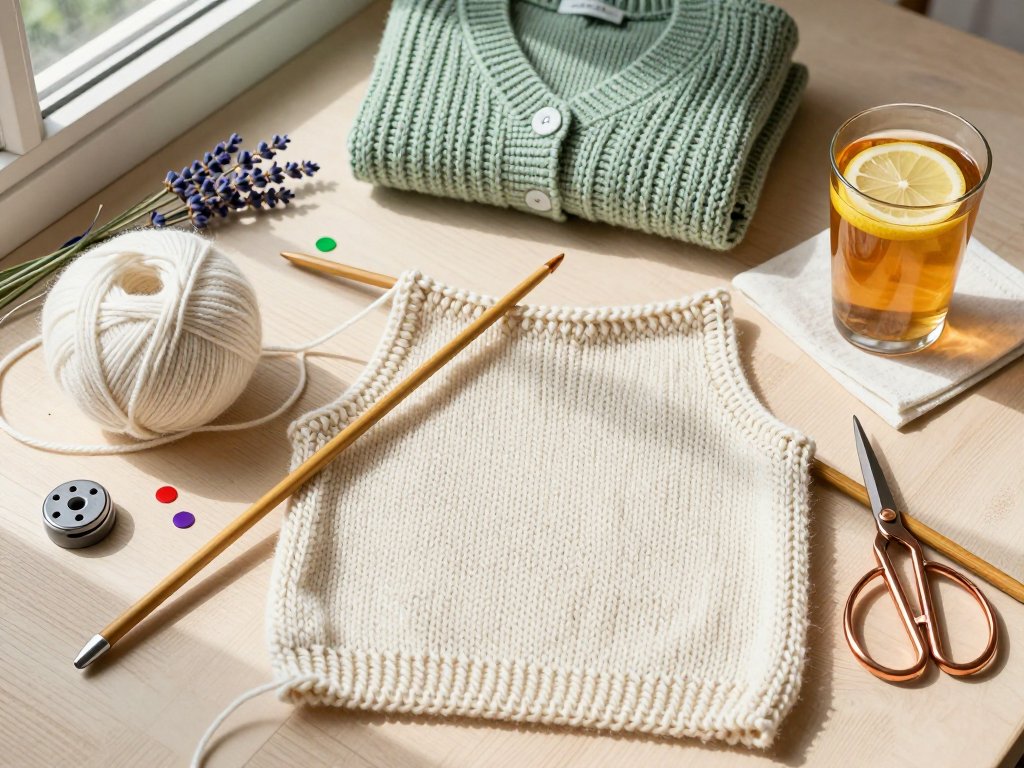
A simple tank top is the perfect first garment project. It uses just knit and purl stitches, with minimal shaping under the arms and at the shoulders.
Cast on enough stitches for your bust measurement plus one inch of negative ease. Work in stockinette stitch until the piece reaches your underarm. Bind off a few stitches at each side for the armholes, then continue straight to the shoulders. Add thin straps by working two narrow strips of garter stitch. Sew the side seams and weave in your ends.
The entire project takes about six to eight hours for an average adult size. That is doable in a weekend of casual knitting — hence the name. You will have a wearable garment by Monday morning.
The Everyday Cardigan
A lightweight cardigan is surprisingly beginner-friendly because it is knit in flat pieces and seamed. No circular needles required. Knit a back panel, two front panels, and two sleeves separately, then sew them together.
Use a simple seed stitch border for the front edges and bottom hem. Seed stitch does not curl, so you do not need to add a separate ribbed band. This is a clever trick that simplifies the finishing process significantly.
Cotton cardigans are perfect for layering over tank tops and sundresses. They add just enough warmth for an air-conditioned restaurant or a cool evening on the patio. You will reach for this garment all summer long.
The Summer Slouchy Tee
For something a little more relaxed, try a slouchy tee knit from side to side. This is a clever construction method that eliminates most of the fitting challenges. You cast on for the length of the tee, work short rows for the neckline, and bind off at the opposite side. The sleeves are formed by leaving stitches on waste yarn instead of binding off.
This pattern looks more complicated than it is. If you can knit, purl, and follow basic instructions, you can make this tee. The oversized fit means gauge is less critical, which makes it a wonderful confidence-building project.
Look for patterns labeled "sideways" or "top-down seamless" for similar beginner-friendly constructions. Many of these patterns are available for free on Ravelry and knitting blogs.
Essential Tools for Cotton Knitting
A few tools will make your cotton knitting experience significantly more pleasant.
Wood or bamboo needles — Cotton yarn slides more easily on wood or bamboo needles than on metal. The slight grip of wood helps you maintain even tension. Save your metal needles for wool.
Point protectors — Because cotton has no stretch, stitches can slide off your needles if you set your project down. Point protectors are cheap and prevent heartbreak.
A row counter — Cotton projects often require precise row counts. A simple clicker counter or a notation app on your phone will keep you on track.
Stitch markers — Use markers to track armhole bind-offs, shoulder decreases, and pattern repeats. They are your best friend for keeping your place when you can only knit a few rows at a time.
Caring for Your Cotton Garments
One of my favorite things about cotton is how low-maintenance it is. Most cotton garments can be machine washed on a gentle cycle and laid flat to dry. Always check the yarn label for specific care instructions, but in general, cotton is far more forgiving than wool.
To block a cotton garment, simply wash it and lay it flat on a towel, shaping it to the correct measurements. Cotton does not require the aggressive pinning that lace or wool pieces need. A gentle stretch to the correct dimensions is all it takes.
Cotton garments soften with wear and washing. The first time you wear your new tank top, it may feel a bit stiff. After three or four washes, it will feel like a beloved old t-shirt. That evolution is one of the quiet pleasures of working with natural fibers.
Troubleshooting Common Issues
Even experienced knitters encounter challenges with cotton. Here is how to handle the most common ones.
My hands hurt after twenty minutes. This is the most common complaint from new cotton knitters. Take frequent breaks, stretch your hands, and try switching to larger needles. If the discomfort persists, consider a cotton blend yarn with some acrylic or bamboo content for more give.
My stitches look uneven. Cotton shows every variation in tension. Blocking helps enormously. If the unevenness is still visible after blocking, embrace it as a handmade characteristic. Garments knit by hand are supposed to have a slightly organic texture. That is what makes them special.
My fabric curls at the edges. Stockinette stitch curls naturally in cotton just as it does in wool. Add a border of garter or seed stitch to your garment edges. Even three or four stitches of a non-curling border makes a significant difference.
The yarn is splitting. Some inexpensive cotton yarns are loosely plied and prone to splitting. If you are struggling with this, try a tightly twisted cotton like Berroco Modern Cotton or Knit Picks Dishie. The difference in your knitting experience is worth the small price difference.
Finding Patterns and Next Steps
Once you have completed your first cotton garment, the possibilities expand dramatically. Cotton is suitable for everything from lightweight shawls to market bags to baby blankets. Many knitters find that once they discover cotton, they want to make their entire summer wardrobe by hand.
Ravelry is an excellent resource for cotton garment patterns. Filter by yarn weight and difficulty level to find projects that match your skills. Many designers offer patterns specifically written for cotton yarns, with the gauge and ease adjustments already calculated for you.
Your local yarn shop is another invaluable resource. The staff can recommend specific patterns and yarns that work well together, and many shops offer classes focused on garment knitting. There is something special about learning alongside other knitters in person.
A Final Word of Encouragement
Knitting your first garment is a milestone. It is different from knitting scarves and hats because you are creating something that will become part of your daily life. Every time you wear it, you will remember the process — the evenings spent on the couch, the episodes of your favorite show you watched while knitting, the satisfaction of binding off the last stitch.
Cotton makes this milestone accessible. It is affordable, forgiving, and produces garments you can actually wear in the season when you are most likely to be knitting — summer, when the days are long and the evenings invite a quiet project in the garden.
Choose a pattern that excites you. Buy a skein of cotton in a color that makes you happy. Cast on. And remember: every expert knitter was once a beginner who decided to keep going.
I cannot wait to see what you make.