Introduction
If you have caught yourself scrolling mindlessly at 11 p.m. with no memory of the last hour, you are not alone. Phone fatigue is real, and it shows up as fuzzy focus, tired eyes, and a restless feeling that has nowhere to go.
The good news? A small craft project can be the off switch you need. This guide collects ten screen-free crafts that are easy to start, gentle on a busy schedule, and genuinely budget-friendly.
Here is exactly what you need to know to begin this week, with a starter kit list, a realistic evening routine, and ideas you can share with your kids.
Why Phone Fatigue Hits So Hard
Our phones are designed to keep us looking at them. Every notification, swipe, and autoplay video is a small loop that asks for one more minute. Over an evening, those minutes add up.
Researchers who study screen time often point to something called attention residue. When you switch between apps constantly, your brain never fully settles on any one thing. You feel busy, but you also feel drained.
Crafts work differently. A project has a beginning, a middle, and an end that you can see and touch. That physical progress gives your mind a clear place to rest.
Why Crafts Calm a Tired Brain
There is a reason crafters describe their hobby as therapy with cheaper rates. Repetitive hand movements, like knitting a stitch or shading a shape, nudge the nervous system toward a calmer state.
This is sometimes called the relaxation response. Your heart rate slows, your breathing deepens, and the mental list of worries gets quieter.
Making something also gives you a sense of control. In a day full of demands, a small object that exists because you made it is a gentle reminder that you can create order.
You do not need to understand the science to feel it. Most people notice the shift within ten minutes of starting, which is exactly why twenty-minute sessions work so well.
What "Analog" Really Means
Analog simply means no screen required. No charging cable, no software update, no algorithm deciding what you see next.
An analog hobby can be as traditional as knitting or as modern as air-dry clay earrings. The common thread is that your hands do the work and your eyes get a break.
You do not need to be "crafty" to benefit. You only need one project, a flat surface, and about twenty minutes.
The Budget-Friendly Starter Kit
Here is the honest truth: you can start most analog hobbies for under twenty-five dollars. Often much less.
- Yarn and a hook or needles. A single skein of medium-weight yarn costs a few dollars, and a beginner hook or needle set is cheap.
- A sketchbook and pencil. Any notebook works for the first week. Spend later if you fall in love with drawing.
- Embroidery floss and a hoop. A small kit with six colors and a wooden hoop is one of the best-value craft purchases there is.
- Air-dry clay. One tub makes several small projects and needs no oven.
- Colored pencils or markers. A basic twelve-pack is plenty for coloring pages and hand lettering.
- A jigsaw puzzle. Thrift stores and dollar stores carry them for very little.
Write your budget down before you shop. The goal is a start, not a full craft room.
One more tip: shop your house first. Old jars, scrap paper, spare buttons, and mismatched yarn can launch a project for free. You may already own more craft supplies than you realize.
Ten Screen-Free Crafts to Try
Pick one from this list and give it two honest sessions. That is enough time to know whether it suits you.
Knitting and Crochet
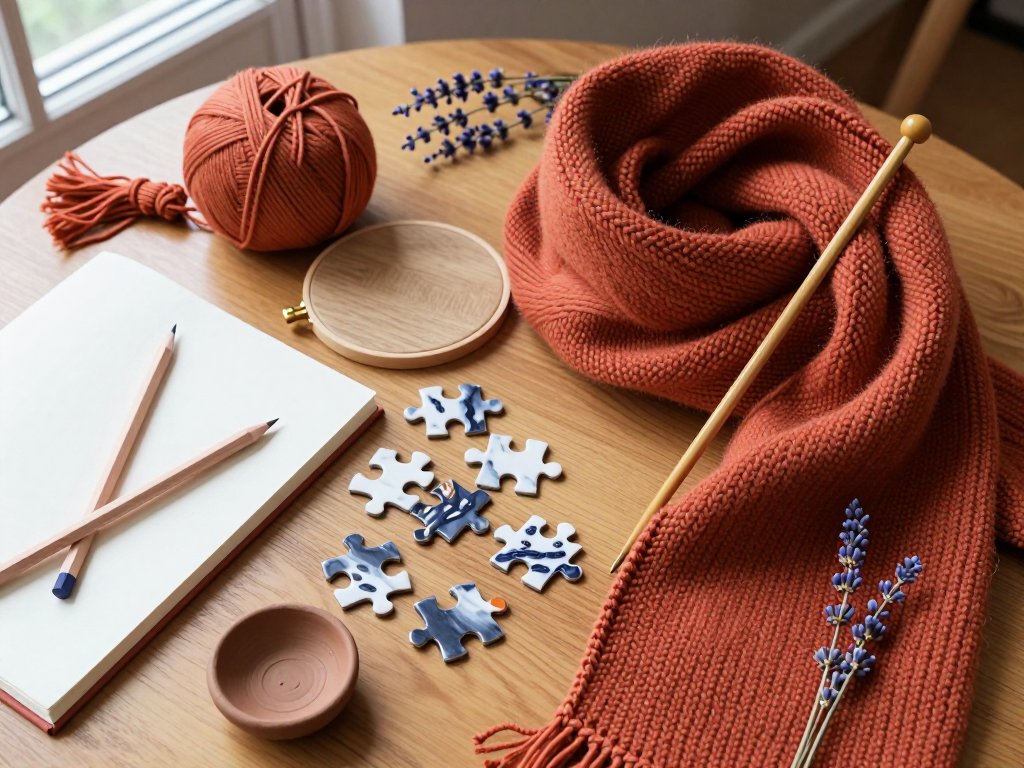
Knitting and crochet are the classic analog hobbies for good reason. The rhythm is repetitive, the supplies fit in a bag, and you can stop at the end of any row.
Begin with a simple rectangle: a scarf, a dishcloth, or a lap blanket. Chunky yarn works up fast, which matters when you want to see progress quickly.
If you are brand new, search for a beginner video or borrow a friend for one evening. The first ten minutes are the hardest, and then your hands learn the rhythm on their own.
Jigsaw Puzzles
Puzzles ask for exactly the kind of quiet attention a tired brain craves. Sort the edge pieces first, then work in small color groups.
A five-hundred-piece puzzle is a satisfying weekend project. Keep a tray or board nearby so you can leave it out and return without losing work.
Puzzles are also wonderfully social. A puzzle on the coffee table invites family members to sit down and add a few pieces while they talk.
Coloring and Drawing
Adult coloring books get a bad rap, but the simple act of filling shapes with color is deeply calming. If you prefer drawing, start with a daily five-minute sketch.
You do not need artistic talent. Trace a leaf from your yard, doodle the mug on your desk, or color a mandala page while listening to music.
A cheap set of colored pencils and a pad of paper is all you need. Keep them in a drawer by the couch so the barrier to starting stays low.
Hand Lettering and Journaling
Hand lettering turns words into art. Practice one alphabet letter a day with a marker and a ruler, and you will see improvement within a week.
Journaling with pen and paper offers something screens cannot: a private space with no notifications. Try a simple gratitude list or a daily weather note.
Do not worry about beautiful handwriting. The point is the ritual, not the result. A few honest lines a day is a real practice.
Embroidery
Embroidery is portable, forgiving, and endlessly rewarding. A hoop, a needle, and six colors of floss are all you need to stitch a small flower.
Start with straight stitches and lazy daisy petals. There are hundreds of free patterns online, but you can also draw your own design directly on fabric.
Because each stitch is small, embroidery fits perfectly into short sessions. Ten minutes while tea steeps is enough to make visible progress.
Air-Dry Clay
Air-dry clay needs no kiln and no oven. Roll it, pinch it, and shape small bowls, beads, or ornaments, then let it dry overnight.
It is messier than yarn, so protect your table with parchment paper. The tactile squish of clay is oddly soothing after a long day online.
Start with pinch pots, which are exactly what they sound like: a ball of clay pinched into a bowl. Paint them the next day with craft paint.
Paper Crafts
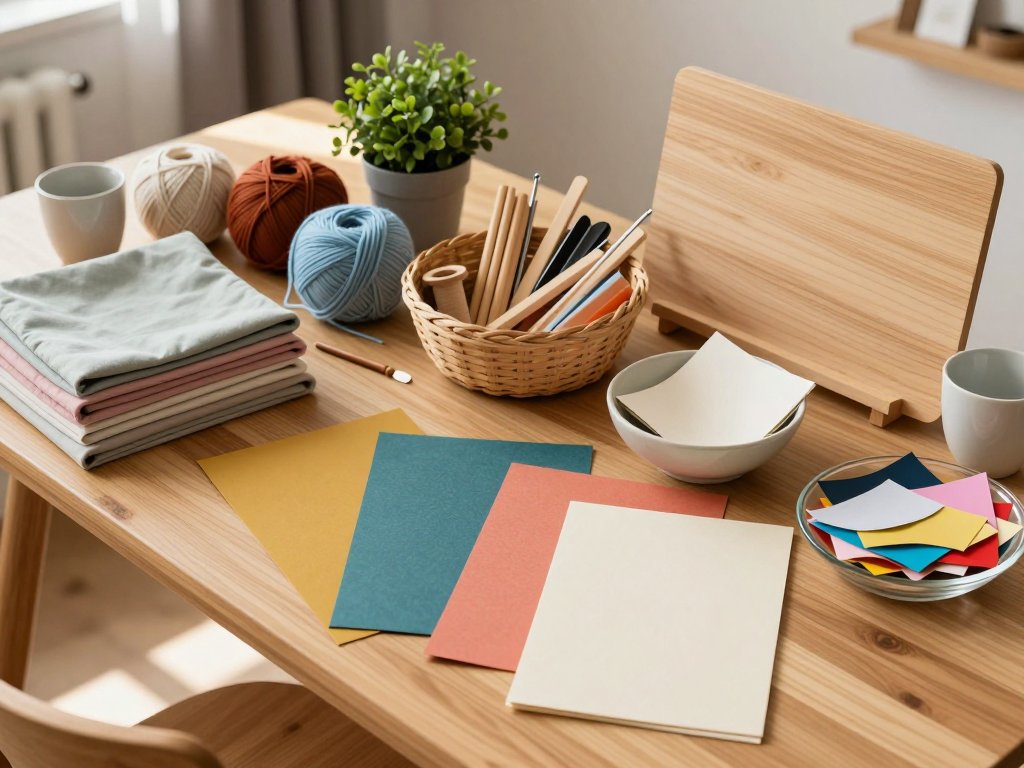
Collage, card making, and simple bookbinding all count as screen-free paper crafts. A stack of scrap paper and a glue stick go a long way.
Make a thank-you card for a friend or cut shapes from old magazines. Paper crafts are especially easy to pause mid-project and resume later.
Keep a box for interesting scraps: pretty wrappers, tickets, ribbon ends, and pages from old books. That box becomes your personal supply shop.
Candle Making
Melting wax and pouring a small candle is a wonderful evening project. Beginner kits include wax, wicks, and a pouring pitcher, and the scent fills the room while you work.
Start with one small container candle. The whole process takes about an hour, most of it waiting for wax to melt and set.
Measure your fragrance carefully and follow the kit instructions the first time. Simple candles are elegant, and they make lovely handmade gifts.
Board Games and Card Games
Games count as analog hobbies, especially when they pull the family together. A deck of cards or a single board game can replace a whole evening of separate screens.
Try a cooperative game if competition stresses you out. Many modern games are designed for players to work as a team.
You can also learn one classic card game well. A family that plays euchre, rummy, or crazy eights has an instant evening activity with zero setup.
Pressed Flower Crafts
Pressed flowers connect you to the season in a way no app can. Collect blooms from your garden or a walk, press them between heavy books, and turn them into cards or small art.
This craft is nearly free, and the waiting time between pressing and using is part of the charm.
Flat flowers like pansies, daisies, and violets press the best. Arrange them on paper, frame them, or tuck them into letters for a personal touch.
How to Build an Analog Evening Routine
You do not need to overhaul your life. A small routine beats a big resolution every time.
- Choose a trigger. After dinner, or after the kids are in bed, is a natural moment to switch to analog time.
- Set a timer. Twenty minutes is enough for a real session. You can always continue if you are enjoying yourself.
- Keep supplies visible. A project basket by your favorite chair removes every excuse.
- Put the phone in another room. Out of sight really does help. You can check it when the timer ends.
Consistency beats intensity. Three short evenings a week will change how your evenings feel.
If an evening session feels impossible, try a morning ten minutes instead. The goal is a daily pocket of analog time, whenever it fits.
Screen-Free Crafts to Share with Kids
Kids absorb screen habits from the adults around them, and crafting together models a calmer way to spend time.
Paper crafts, coloring, and simple sewing projects work well with young children. Older kids often enjoy puzzles, clay, and lettering challenges.
Keep sessions short and let the child lead. The goal is connection, not a perfect finished piece.
You might be surprised by what children choose. Many kids love the same repetitive crafts adults find calming, and the conversation that happens while hands work is often the best part.
Analog Crafts Make Wonderful Gifts
One of the quiet joys of analog hobbies is that they produce real gifts. A knitted scarf, a pressed flower card, or a small clay bowl says something a store-bought present cannot.
Start a gift project early and work on it a little each evening. The slow making becomes part of the gift itself.
Handmade gifts also protect your budget. A year of small crafted presents can replace a dozen expensive purchases, and recipients tend to treasure them longer.
Staying Consistent Without Guilt
Some weeks you will craft every night. Other weeks you will not touch your project at all, and that is okay.
The point of an analog hobby is not productivity. It is a break, and breaks are allowed to be imperfect.
If you skip a week, simply pick the project back up. Your yarn and your sketchbook will still be there, waiting without judgment.
Common Mistakes to Avoid
Every new crafter makes the same few errors. Knowing them saves you money and frustration.
Buying everything at once. Start with one project and one supply run. A shelf of unused tools is the fastest way to quit.
Choosing a project that is too big. A queen-sized blanket is a terrible first knit. Choose something you can finish in a week.
Comparing yourself online. Remember why you started: to get away from the screen, not to win approval on one.
Quitting after one frustrating session. Every craft has a clumsy first hour. Push through one more session before you decide it is not for you.
Ignoring your hands. If a project hurts, adjust your grip, take breaks, and look up the proper technique. Comfort matters more than speed.
Final Thoughts
Phone fatigue is not a personal failure. It is a side effect of modern life, and you can respond to it gently.
Choose one craft from this list, gather a few supplies, and give yourself twenty quiet minutes tonight. That small, screen-free act is the whole secret.
Your hands remember how to make things, and they have been waiting for the chance. Start with something small, be kind to yourself, and let the craft do its quiet work.