Introduction
Every year, Michaels — the beloved craft retailer that so many of us rely on for yarn, paint, and inspiration — releases its annual trend report.
And if you are anything like me, you look forward to it the way some people wait for the new Starbucks holiday menu.
There is something deeply satisfying about knowing what the rest of the crafting world is making, buying, and pinning.
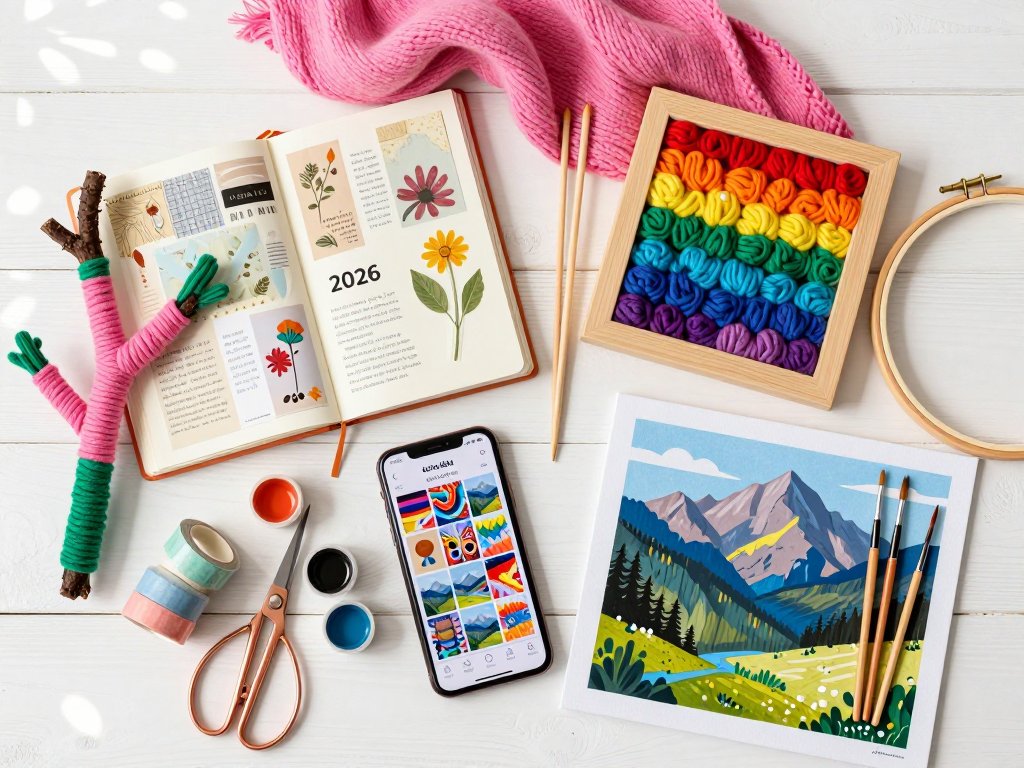
This year's report highlights eight major trends shaping how we create in 2026. Some feel like a natural evolution of what we have been seeing.
Others caught me completely off guard — in a good way. I have organized them here with exactly what you need to know to try each one yourself, plus a few honest thoughts on which are worth your precious crafting time.
Whether you have an entire craft room or just a basket in the corner of your living room, there is something here for you. Let us dive in.
1. Yarn Graffiti and Urban Knitting
If you have been driving through your town recently and spotted a tree wrapped in colorful knitted panels or a park bench sporting a cozy crocheted seat cover, you have witnessed yarn graffiti — also known as yarn bombing.
This trend has been simmering for years, but in 2026 it has reached full bloom.
What started as a quirky street art movement has become a mainstream community craft. Michaels reports that sales of chunky yarns in weather-resistant fibers have jumped significantly this year. The appeal is obvious: yarn graffiti lets you make a public, cheerful statement without needing any artistic drawing skills.
What you need to get started: Grab several skeins of acrylic or superwash wool yarn in colors that make you happy.
Acrylic holds up well outdoors and is affordable enough for large projects. You will also need a basic set of knitting needles or a crochet hook — size 8mm or larger works best for the chunky look that reads well from a distance.
A darning needle for seaming is essential.
Start small. Wrap a lamp post or a tree trunk with a simple knitted rectangle.
Use a basic garter or stockinette stitch. Sew the edges together around the trunk and add a few decorative elements like crocheted flowers or hanging strands.
Most yarn bombing projects are temporary and removable, so you never have to worry about damaging public property.
Community groups across the country are organizing yarn bombing events for public spaces, senior centers, and schoolyards. It is a beautiful way to brighten someone's day with something handmade.
2. Junk Journaling and Memory keeping
Junk journaling has been gaining momentum for about two years, but 2026 is the year it has officially exploded.
The concept is simple: instead of buying a pristine pre-made journal, you create one from found and recycled materials — old book covers, sheet music, envelopes, scrapbook paper, fabric scraps, and ticket stubs.
The beauty of junk journaling is that there are no rules. You are not trying to make a perfect scrapbook.
You are building a textured, layered keepsake that holds memories in a deeply personal way.
Michaels has responded by stocking more mixed-media paper pads, vintage-style ephemera packs, and specialty binding supplies.
What you need to get started: An old hardcover book (thrift stores are perfect for this), a bone folder for crisp creases, bookbinding glue or a glue stick, decorative papers, and a needle and strong thread for binding signatures.
You can also use washi tape, lace, stamps, and any small mementos you have been saving.
I love this trend because it honors the idea that our everyday lives are worth documenting.
That train ticket from a family trip, the wrapper from your child's favorite candy, a pressed flower from your garden — these small things become art when you give them a home in a junk journal.
3. Digital-Utilizing Crafts
Here is the trend that surprised me the most. In 2026, crafters are embracing digital tools to enhance traditional handmade projects.
We are not talking about full-on digital scrapbooking or AI-generated art (though those exist too).
This trend is about using technology as a tool for precision and planning in otherwise analog crafts.
Think about using a design app to plan a quilt layout before you cut any fabric, or using a yarn calculator to figure out exactly how much yarn a sweater pattern requires.
Michaels reports that QR codes are appearing on project packaging, linking to video tutorials and interactive pattern guides.
The craft store has also expanded its digital cutting machine section — Silhouette and Cricut supplies are flying off shelves.
What you need to get started: You likely already have the most important tool — a smartphone or tablet.
Apps like Procreate, Canva, and even Pinterest's collage feature let you plan color palettes and layouts digitally before committing to materials.
If you have access to a cutting machine, explore the free project libraries available through the manufacturer's software.
Do not let the word "digital" intimidate you. This trend is about using tech to save time and reduce waste, so you can spend more of your limited crafting hours actually making things with your hands.
4. Punch Needle Embroidery
Punch needle has quietly become one of the most popular fiber arts of the decade, and 2026 is the year it is everywhere.
Unlike traditional embroidery, which uses a sharp needle and requires precise stitching, punch needle uses a hollow tool that punches loops of yarn through woven fabric, creating a plush, rug-like texture.
The learning curve is remarkably gentle. Most people create a project they are proud of within their first hour of trying. That instant gratification makes it incredibly appealing for busy moms who want to see progress quickly.
What you need to get started: A punch needle tool (sold at Michaels for about $12), monks cloth or weavers cloth, an embroidery hoop or frame to keep the fabric taut, and worsted-weight yarn.
The yarn does not need to be expensive — Red Heart or Craft Smart brands work beautifully for practice projects.
Begin with a simple shape — a circle, a heart, or a leaf. Stretch your fabric tightly in the hoop, thread your punch needle according to the package instructions, and punch from the back of the fabric.
The loops form on the front. Keep your rows close together for a full, plush finish.
You can create wall hangings, pillow covers, rug accents, and even handbags once you get comfortable with the technique.
5. Upcycled and Sustainable Crafting
Sustainability continues to be a driving force in crafting, but in 2026 it has shifted from a niche concern to a mainstream expectation.
Crafters are actively seeking ways to repurpose household items into creative projects instead of buying new materials.
Michaels has launched dedicated sections for eco-friendly supplies, including recycled paper pads, natural dye kits, and biodegradable glitters.
What I love most about this trend is how it aligns with the values many of us already hold. We craft because we love making something beautiful and useful. Using materials that would otherwise go to waste makes the process even more meaningful.
What you need to get started: Look around your home first. Glass jars become candle holders or storage containers. Old t-shirts become yarn for rag rugs. Cardboard boxes become bookbinding covers or organizers. Wine corks become stamps or trivets. The possibilities are limited only by your imagination.
Michaels is also carrying more refillable supply options — glue sticks, markers, and paint sets that let you buy just the refill instead of a whole new package. Small changes like this make a big difference over time.
6. Floral Foam-Free Flower Arranging
Floral foam has been a staple of flower arranging for decades, but it is also a non-biodegradable plastic that sheds microplastics into our water systems. In 2026, crafters are embracing foam-free techniques, and Michaels has responded by expanding its selection of floral frogs, chicken wire, and reusable mechanics.
This trend is particularly exciting for the DIY wedding and event crowd. Instead of spending money on floral foam that ends up in a landfill, you can create stunning arrangements using a simple grid of tape over a container, a kenzan (metal flower frog), or crumpled chicken wire anchored in a vase.
What you need to get started: A low, wide container, floral tape, and sharp clippers are the basics for tape-grid arranging.
For a kenzan approach, you will need a shallow dish and a metal flower frog.
Chicken wire works beautifully in larger vessels — just crumple it into a ball and secure it with floral tape across the rim.
The technique takes a little practice, but the results are actually more natural-looking than foam-based arrangements. Flowers can move and settle organically, and your water stays clean. As a bonus, you can compost the stems when you are done.
7. Textured and Boucle Yarn Knitting
If you have browsed the yarn aisle recently, you have noticed the explosion of textured yarns. Boucle, chenille, eyelash, and chainette yarns are everywhere, and they are being used to create garments and accessories with incredible visual and tactile interest.
The appeal is twofold. First, these yarns create stunning finished pieces that look far more complex than they actually are.
A simple stockinette scarf made from a boucle yarn looks like an artisanal luxury piece.
Second, textured yarns are forgiving — they hide minor stitch inconsistencies that would be visible in smooth yarn, making them perfect for new knitters who are still building their confidence.
What you need to get started: Choose a single skein of a textured yarn in a color you love.
Boucle yarns with a wool or acrylic blend work well. Use larger needles than you think you need — a size 10 or 11 US (6mm to 8mm) — to keep the stitches open and the fabric drapey.
Cast on a simple rectangle for a scarf or cowl. The yarn does all the visual work for you.
A word of caution: textured yarns can be tricky to rip back if you make a mistake. The loops catch on each other. Take it slow and count your stitches regularly. If you do need to pull back, do it gently, one stitch at a time.
8. Paint by Numbers Reimagined
Paint by numbers is back, but not as you remember it from your grandmother's collection.
The 2026 version features sophisticated designs on high-quality canvas with premium acrylic paints. Think custom portraits from your own photos, abstract art in muted earth tones, and oversized canvases that become statement pieces for your home.
Michaels reports that paint by numbers kits are among their fastest-growing product categories. The reason is clear: in a world that asks us to be constantly productive and connected, paint by numbers offers a low-pressure creative escape.
There is no decision fatigue. No fear of the blank page. Just the quiet joy of watching an image emerge, one numbered section at a time.
What you need to get started: A good paint by numbers kit with a pre-printed canvas, a set of numbered acrylic paint pots, and brushes.
Some brands now include a small magnifying glass for the tiny sections — a thoughtful addition.
Set up a comfortable workspace with good lighting and protect your table with newspaper or a disposable tablecloth.
Work from the largest sections of color to the smallest. This builds momentum and gives you a satisfying sense of progress early in the project. Rinse your brushes thoroughly between colors to keep them clean. And most importantly, do not rush. The joy is in the process, not in finishing.
Bringing the Trends into Your Craft Room
Looking at these eight trends, I notice a common thread: crafters in 2026 want their making to be meaningful, sustainable, and personal.
Whether you are yarn bombing a park bench, punching loops of wool into a wall hanging, or mapping out a quilt on your tablet, the motivation is the same — to create something that reflects who you are and what you care about.
You do not need to try all eight trends. Pick one that genuinely excites you. Maybe it is the meditative calm of a paint by numbers evening, or the thrill of seeing your first punch needle project take shape. Give yourself permission to start imperfectly.
Michaels has made this year especially easy to explore new crafts. Their in-store displays are organized by trend, with starter kits that include everything you need to try something new without committing to a full supply haul.
Grab a friend and choose a trend to explore together. Crafting is always better shared.
Here is to a year of making beautiful things.