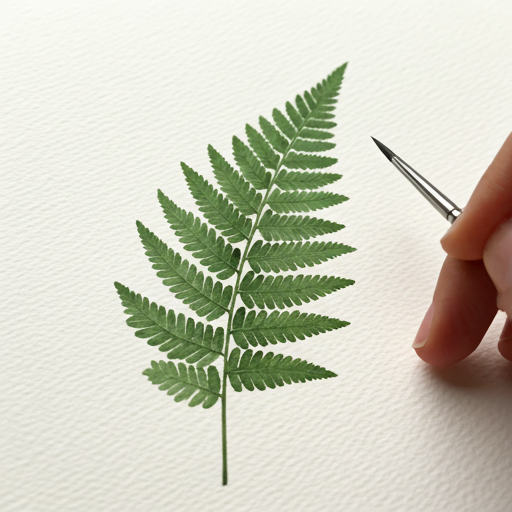
Understanding structural composition in botanical watercolor through minimal aesthetics
Sometimes the most beautiful part of a painting isn’t what you add—it’s what you leave behind.
In the quiet moments between school drop-offs, laundry cycles, and dinner prep, creativity often finds its way back into our lives in small, meaningful ways. Watercolor is especially suited to these moments—gentle, forgiving, and wonderfully expressive. And when paired with the concept of negative space, even the simplest subject—like a fern—can become something truly elegant.
What Is Negative Space?
Negative space is the area around and between your subject. Instead of painting the fern itself, you paint the background—and let the shape of the fern emerge naturally. It’s a subtle shift in thinking, but it creates artwork that feels airy, balanced, and surprisingly sophisticated.
Think of it like this: rather than drawing every leaf, you’re revealing it.
Why Ferns?
Ferns are the perfect subject for this technique. Their repeating leaf patterns (called fronds) create rhythm and structure, while their organic shapes keep things relaxed and forgiving. No two fronds need to be identical—which makes this ideal if you're squeezing in a creative session during nap time or between daily tasks.
Getting Started: Simple Supplies
- Watercolor paper (cold press works best)
- A medium round brush
- Green and neutral watercolor paints
- A jar of clean water
- Paper towel (for gentle corrections)
That’s it—no complicated setup required.
The Technique: Painting Around the Fern
Start by imagining (or lightly sketching) the shape of your fern. Then begin painting the space around it. Use soft, flowing brushstrokes and vary the intensity of your greens to create depth.
As you build layers, the fern will begin to “appear” without ever being directly painted. This creates a soft, almost magical effect—like the plant is emerging from light itself.
A Moment of Calm in the Process
There’s something deeply calming about working with negative space. It encourages patience and presence—two things that can feel in short supply during busy seasons of life. Each brushstroke becomes intentional. Each pause feels restorative.
This isn’t about perfection. It’s about creating something quietly beautiful, just for you.
Make It Your Own
Once you’re comfortable, experiment with background colors—soft blues, warm neutrals, even muted pinks. Try layering multiple fern shapes or leaving parts intentionally unfinished for a modern look.
Your painting doesn’t need to be complex to feel complete.
In the end, negative space teaches us something beyond art: sometimes, what we leave untouched is just as meaningful as what we create.