Introduction
Summer is here, and if you are a parent, you know what that means. The first week is blissful—sleeping in, lazy mornings, the smell of sunscreen.
By the second week, someone has said "I'm bored" at least six times before breakfast.
The screens come out. First the tablet, then the phone, then everyone is scattered across the house in their own digital worlds.
You want to pull them back together. You want something that does not involve a charger.
That is where Michaels comes in. The beloved craft retailer has rolled out a fresh lineup of summer DIY craft kits designed specifically to get kids off screens and into making. From tie-dye kits and paint-your-own birdhouses to friendship bracelet looms and sand art sets, these projects are built for real life—messy, fun, and completely battery-free. The best part? Most of them are under twenty dollars and can be done right at the kitchen table with supplies you already have on hand.
In this article, we will explore the best new Michaels summer kits, how to choose the right one for your child's age and interests, and simple ways to turn a single kit into an afternoon of family connection.
The Screen-Free Movement Comes to Crafting
We have all felt it. That nagging worry about how much time our kids spend looking at screens.
According to a 2023 report by Common Sense Media, children aged eight to twelve spend an average of five and a half hours per day on screens for entertainment alone.
For teenagers, that number jumps to over eight hours. Pediatricians recommend no more than two hours per day of recreational screen time for children over six.
Most families are nowhere close to that goal.
But here is the thing: telling a child to "just go play outside" does not always work, especially during the hottest part of the afternoon.
What does work is handing them a project. Something tangible. Something that produces a result they can hold in their hands and say, "I made this." That is the magic of a good craft kit.
It does not feel like a chore or a punishment. It feels like an invitation.
Michaels has recognized this shift and responded with a thoughtful summer collection that meets families where they are.
The kits are designed with busy parents in mind—everything you need is in the box, the instructions are simple enough for a child to follow with minimal help, and the cleanup is reasonable.
No last-minute trips to the store for missing supplies. No complicated steps that require a craft degree.
Top New Summer Kits at Michaels This Year
I stopped by my local Michaels last week and was pleasantly surprised by what I found on the shelves. Here are the kits that caught my eye, organized by age group and interest.
Tie-Dye Kits (Ages 6 and Up)
Tie-dye has made a huge comeback, and Michaels is leaning into it hard this summer.
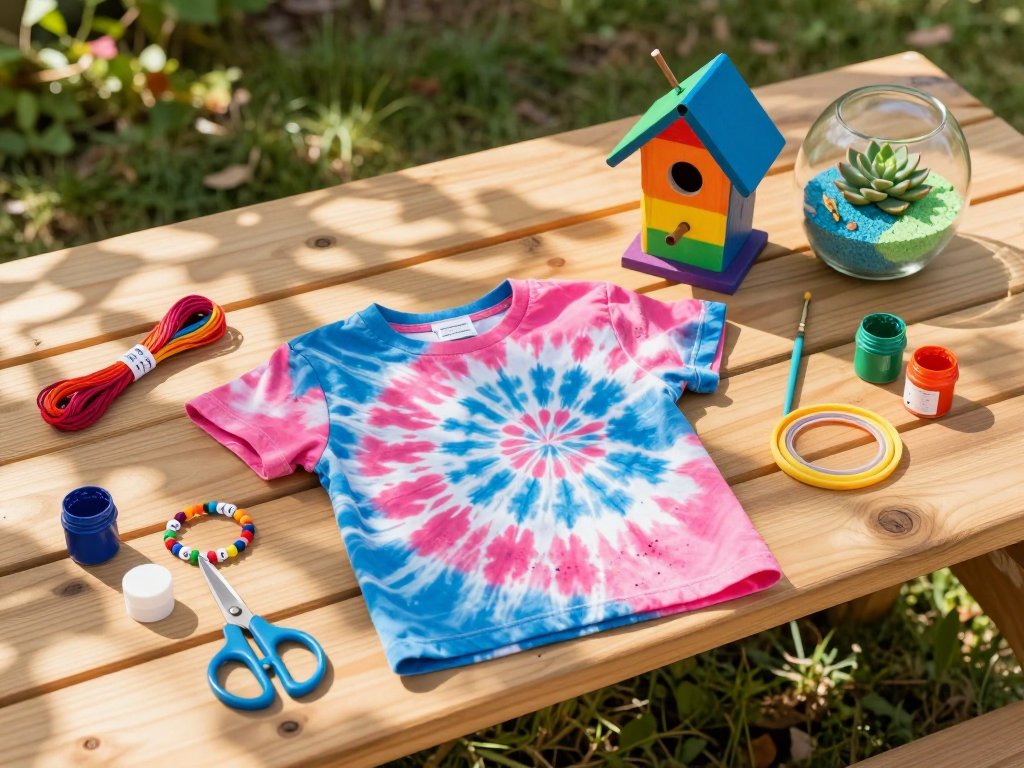
Their basic tie-dye kit comes with three bottles of vibrant dye, rubber bands, and gloves—enough to transform two plain white t-shirts into wearable art.
What I love about this kit is that it teaches patience and cause-and-effect in a really tangible way.
You twist and band the fabric, apply the dye, and wait. The reveal the next morning is pure magic for a child.
Pro tip: pick up a pack of plain white cotton socks or a canvas tote bag while you are at the checkout. They cost a few dollars and give your child extra surfaces to experiment on. Tie-dye is addictive in the best possible way, and the results never look the same twice. And if the colors run a little wild, that is part of the charm—every piece is one of a kind.
Paint-Your-Own Birdhouse Kits (Ages 4 to 10)
These are classics for a reason. The Michaels paint-your-own birdhouse kit includes an unfinished wooden birdhouse, six pots of acrylic paint, a brush, and a small palette.
Assembly requires just a dab of wood glue (not included, but you have some in the junk drawer).
This is a wonderful project for younger children who are still developing fine motor skills.
The painting itself is open-ended, which means no two birdhouses look alike. My daughter painted hers bright pink with purple polka dots, and the robins do not seem to mind one bit.
Friendship Bracelet Looms (Ages 8 and Up)
The friendship bracelet trend is sweeping summer camps and playgrounds, and Michaels has responded with affordable loom kits that make the process much easier than the old-fashioned pin-and-tape method.
The kit includes a small plastic loom, six spools of embroidery floss, and an instruction booklet with ten different patterns.
Children learn basic knotting techniques, pattern reading, and color coordination—all while creating something they can share with friends.
A single loom kit can keep a child entertained for an entire rainy afternoon, and the bracelets make thoughtful handmade gifts.
Sand Art Terrarium Kits (Ages 5 and Up)
These are relatively new to the Michaels summer lineup and they are already flying off the shelves.
Each kit includes a clear glass container, five colors of sand, a small succulent or artificial plant, and decorative stones.
Children layer the sand in patterns, place the plant, and arrange the stones to create a miniature landscape.
It is a calming, almost meditative activity that appeals to both boys and girls.
The finished terrarium doubles as room decor, which means your child gets a sense of pride every time they walk past it. It also makes a thoughtful handmade gift for grandparents or teachers.
DIY Clay Jewelry Kits (Ages 7 and Up)
Polymer clay jewelry is having a moment on social media, and Michaels has capitalized on it with an all-in-one kit that includes six blocks of colorful clay, a roller, shape cutters, and findings for earrings and pendants.
Children learn to condition the clay, shape it, and bake their creations.
The results are genuinely wearable and surprisingly professional-looking, which is a huge confidence booster for young makers.
This kit works well for siblings of different ages because each child can work at their own skill level—simple shapes for the younger ones, more detailed designs for the older ones.
How to Turn a Kit into a Family Afternoon
A craft kit is wonderful on its own, but with a little planning, you can stretch it into a meaningful family activity. Here are a few ideas that have worked well in our house.
Set up a crafting station. Cover the kitchen table with newspaper or a vinyl tablecloth.
Put out the kit supplies, a bowl of water for rinsing brushes, paper towels, and a designated drying area.
Having everything ready before you call the kids over prevents the frantic "where are the scissors?" scramble that derails momentum.
Put on a podcast or an audiobook. Crafting together is a wonderful opportunity for shared listening.
Our family loves nature stories and funny middle-grade novels during craft time. The audio keeps hands busy and minds engaged without the visual stimulation of a screen.
Before you know it, an hour has passed and everyone has something to show for it.
Make it a multi-day project. There is no rule that says a kit must be finished in one sitting.
Spreading a project across several afternoons teaches children that creativity does not have to be rushed.
Day one can be planning and setup. Day two is the main work. Day three is finishing touches and display.
The anticipation between sessions is part of the fun.
Display the finished work. When your child completes a project, help them find a special place to show it off.
A shelf in the living room, a spot on the refrigerator, or their own bedroom windowsill.
Taking their work seriously communicates that you value what they make. That validation matters more than the finished product itself.
Why Making Matters for Kids
I know it can be tempting to view craft kits as just another activity to fill time.
But research shows that hands-on making has profound benefits for children's development. When a child engages in a creative project, they are practicing executive function skills—planning, organizing, and sequencing steps.
They are developing fine motor control that supports handwriting and other tasks. They are learning to tolerate frustration when a knot does not go as planned or the paint drips where it should not.
Perhaps most importantly, they are building what psychologists call "creative confidence"—the belief that they can generate ideas and bring them to life.
This mindset carries into academics, problem-solving, and eventually their careers. The child who learns that it is okay to make mistakes and try again is a child who will take risks and persist through challenges.
A two-dollar craft kit can plant a seed that grows into something much larger.
There is also something deeply social about crafting together. When siblings or friends work on projects side by side, they talk.
They share materials. They compliment each other's work and offer suggestions. In a world where so much of children's social interaction happens through screens—texting, gaming, scrolling—crafting provides a rare opportunity for face-to-face connection without the pressure of a formal conversation.
The project gives them something to focus on together, which makes the talking feel easier and more natural.
And do not underestimate the value of quiet. In our relentlessly noisy world, a craft project offers a rare permission slip to be still.
Children who spend their days in classrooms buzzing with activity, extracurriculars, and screen noise often do not get enough unstructured quiet time.
Sitting at a table, focusing on a single task, letting the mind wander while the hands work—that is a skill in itself.
It is the foundation of mindfulness, and it starts with something as simple as threading a needle or painting a wooden birdhouse.
And let us be honest: making things together is just plain fun. Some of my happiest memories with my children involve glue, glitter, and controlled chaos. The laughter, the "oops" moments, the pride in a finished project—these are the small moments that add up to a childhood.
Tips for Choosing the Right Kit
Walking into Michaels during the summer can be overwhelming. The seasonal aisle is packed with colorful boxes, and every kit promises hours of fun. Here is how to pick one that will actually deliver.
Consider your child's temperament. A patient, detail-oriented child will love a friendship bracelet loom or a diamond painting kit. A high-energy, impulsive child will do better with tie-dye or a build-your-own volcano. Match the kit to the child, not the age label.
Check the mess level honestly. If you are someone who cannot handle glitter on the floor, do not buy a glitter kit. There is no shame in knowing your limits. Many kits—like the terrarium kits and clay jewelry sets—are naturally low-mess and stress-free.
Think about the end result. Some children are process-oriented and love the act of making regardless of the outcome.
Others are product-oriented and will lose interest if the finished piece does not look like the picture on the box.
If your child falls into the second group, read online reviews of the kit to see real photos from other families before buying.
Buy two of the same kit for siblings. This is perhaps the most practical tip I can offer.
Nothing derails a crafting afternoon faster than two children fighting over the only bottle of blue paint.
When each child has their own complete kit, the peace is preserved and everyone gets to make exactly what they want.
Conclusion
Summer is short, and the days when our children want to sit at the table and make things with us are even shorter.
Michaels new summer DIY kits make it easy to say yes to screen-free creativity—no elaborate setup, no special skills, just a box of possibilities and a kitchen table.
Whether you choose tie-dye, birdhouses, friendship bracelets, or sand art, you are giving your child something precious: the experience of making something with their own two hands.
So pick up a kit on your next grocery run. Clear the table. Put on some music. And give yourselves permission to make a beautiful mess together. The screens will still be there when you are done. But you might find that nobody misses them.